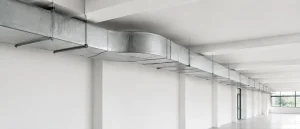
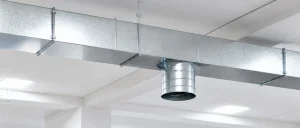
Moving air across a large commercial building takes more than a powerful fan. The duct route, diameter, fittings and joint quality all influence how effectively air reaches the spaces that need it. On longer runs, small design decisions can make a meaningful difference to overall performance.
Spiral ductwork is well suited to these longer routes because its circular profile and rigid construction support efficient air distribution. Getting the best from it means considering the whole duct system, from the fan connection to the final outlet, rather than choosing the duct in isolation.
Why resistance matters more as duct runs get longer
Air loses pressure as it travels through ductwork. Some of this loss comes from friction along the duct walls, while additional losses occur at bends, branches, transitions and components such as filters and dampers. A longer route adds more friction, so controlling resistance becomes increasingly important.
Spiral ductwork has a circular cross section, which provides a compact perimeter for the airflow area it carries. This is a useful starting point for efficient air movement. Its rigid construction also helps maintain the intended shape along the route, provided the installation is properly supported.
However, a spiral duct does not automatically deliver an efficient ventilation system. Diameter, air velocity and the arrangement of fittings still determine much of its performance. A straight run with appropriately selected fittings can perform very differently from a route with repeated tight bends.
The practical aim is to deliver the required air volume without unnecessary pressure loss. For a given airflow, lower system resistance can reduce the pressure the fan needs to provide. Actual energy use also depends on fan efficiency, controls and operating hours.
Choose the diameter around airflow and available pressure

The correct duct diameter starts with the air volume required by the spaces being served. Designers then consider velocity, pressure loss, noise and the space available for installation. Choosing a diameter simply because it fits above a ceiling can overlook these connected requirements.
For the same airflow, a larger diameter reduces air velocity and generally lowers friction losses along a straight run. This can be particularly useful over longer distances, where pressure loss accumulates. The choice still needs to account for insulation, supports, access and connections to other equipment.
A main duct serving several branches should also be assessed in sections. In a supply system, the airflow remaining in the main reduces as air leaves through each branch. In an extract system, flow usually increases as branches join towards the fan. Diameter changes should follow those calculated duties.
- Confirm the design airflow for each space and branch.
- Calculate resistance along the route that determines the required fan pressure.
- Include fittings, terminals, filters and other components in the calculation.
- Check noise requirements alongside velocity and pressure loss.
This gives the ducted ventilation system a sound design basis rather than relying on fan capacity to compensate for avoidable restrictions.
Plan a direct route with carefully selected fittings
Long commercial runs benefit from a clear route planned before installation begins. Coordinating ductwork with structural elements, pipework, cable trays and ceiling access helps preserve straightforward paths and reduces unnecessary changes of direction.
Standard spiral duct lengths and compatible circular fittings make it practical to build consistent main runs. The important detail is how those sections connect. Bend geometry, branch angles and transitions all affect resistance, so fittings should be selected as part of the airflow design rather than treated as incidental accessories.
Where space allows, bends with a generous radius can reduce losses compared with tight changes of direction. Gradual transitions can also help limit pressure losses when the diameter changes. Where space is restricted, the chosen fitting needs to be included accurately in the pressure calculation.
It is also worth planning the positions of branches and outlets early. A direct main route with sensible branch connections can distribute air effectively without a complicated network of diversions. Leave suitable access to dampers and inspection points, and allow for insulation where required. An efficient route should remain straightforward to inspect, adjust and maintain throughout its working life.
Keep the run sealed, supported and accessible

Good airflow calculations depend on the installed ductwork behaving as intended. Leakage changes how much air reaches the outlets or is collected from the spaces served. Across a long network with numerous connections, joint quality deserves careful attention.
In a supply system, leaks can release air before it reaches its intended destination. In an extract system, leaks can draw air into the duct from unintended areas, reducing useful extraction at the required points. Suitable seals, correctly assembled fittings and appropriate testing help protect the design performance.
Our guidance on duct sealing and commercial ventilation airflow explains why airtight connections matter throughout the system. The required sealing approach should reflect the specification, operating pressure and intended use.
Supports are equally important. Their arrangement should suit the duct size, material and installation conditions, maintaining alignment without distorting the duct or placing undue strain on connections. Coordination with the building structure should happen before fixing positions are finalised.
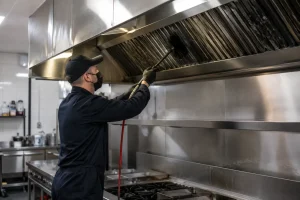
Finally, retain access where inspection and cleaning will be needed. Appropriate insulation and vapour control should also be considered wherever air temperatures create a risk of heat loss, heat gain or condensation.
Balance and commission the complete ventilation system

A well designed main run still needs commissioning. Branches have different lengths, fittings and terminal arrangements, so they do not naturally offer identical resistance. Without adjustment, some outlets may receive more air than intended while others receive less.
Volume control dampers allow commissioning engineers to adjust distribution between branches. Their positions should be planned so they can be reached, measured and adjusted safely. Balancing should work with the duct design, not depend on excessive throttling to correct a poorly arranged network.
For a closer look at this process, see how airflow balancing improves ducted ventilation systems. Measuring actual airflow confirms whether the completed installation delivers what each area needs.
Commissioning should also consider fan settings, controls and the condition of relevant components. Record the final settings and measured duties so there is a useful reference for future maintenance. If partitions, occupancy or equipment change later, review airflow requirements rather than assuming the original settings remain suitable. This helps a long spiral duct run continue supporting efficient, reliable ventilation as the building’s needs evolve.
- Spiral ductwork suits long runs when diameter, routing and fittings are designed together.
- Pressure calculations should include the full route, not just straight duct lengths.
- Sealed joints and suitable supports help preserve the intended airflow performance.
- Accessible dampers and measured commissioning support effective air distribution.
Frequently asked questions
Is there a maximum length for a spiral duct run?
There is no single maximum length for every installation. Practical limits depend on airflow, diameter, fittings, available fan pressure and noise requirements. The complete route needs to be assessed against the required duty.
Does a larger spiral duct always improve efficiency?
Increasing diameter generally reduces velocity and friction loss for the same airflow. However, the final size must also suit the space, system duty and equipment connections. It should be selected through calculation rather than increased without checking the wider design.
Can spiral ductwork serve several areas from one main run?
Yes. A main run can serve multiple branches when each section is sized for the airflow it carries. Branch arrangements, controls and balancing must also suit the needs of the spaces being served.
Planning a longer ventilation run?
Talk to CVK Ductwork about spiral ductwork for your ventilation project. Share your layout and airflow requirements so we can discuss a practical installation that supports your building’s needs.