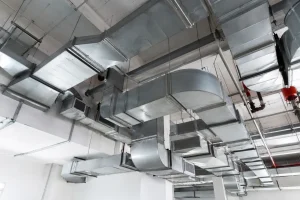
Choosing between rectangular and spiral ductwork is not just a design decision. It directly affects airflow, energy costs, installation time, and long-term performance.
We often see projects where the wrong duct type leads to noise issues, higher running costs, or poor airflow. In this guide, we explain the real differences in simple terms so you can make the right decision from the start.
What is ductwork in HVAC systems?
Ductwork is the network of pipes or channels that move air around a building. It is a key part of any heating, ventilation, and air conditioning system. Commercial ductwork systems in the UK are commonly designed in line with DW/144 ductwork specifications and current HVAC ventilation standards to ensure airflow efficiency and compliance.
There are two main ductwork types used in most systems:
- Rectangular ductwork (flat-sided)
- Spiral ductwork (round)
Both do the same job, but they perform very differently depending on the space and application.
Why choosing the right ductwork matters
Many people focus on equipment like fans or units, but ductwork plays an equally important role.
If the wrong type is used:
- Airflow becomes inefficient
- Energy costs increase
- Noise levels rise
- Maintenance becomes more frequent
That is why a proper HVAC ductwork comparison is essential before installation.
What is spiral ductwork?
Spiral ductwork is circular and manufactured by forming metal into a continuous spiral shape.
It is widely used in modern commercial buildings and open ceiling designs.
Spiral ductwork advantages
Spiral systems are known for performance and efficiency.
- Smooth airflow with less resistance
- Lower noise levels due to the curved shape
- Fewer joints, which reduces air leakage
- Faster installation in most cases
- Clean appearance for exposed systems
Because of these benefits, many engineers now prefer spiral air ducts where space allows.
What is rectangular ductwork?
Rectangular ductwork has flat sides and is designed to fit into tight or restricted spaces.
It has been used for decades and is still essential in many buildings.
Rectangular ductwork benefits
Rectangular systems offer flexibility where space is limited.
- Fits easily into ceilings and wall cavities
- Ideal for narrow or low-height areas
- Easier to connect with existing systems
- Suitable for complex layouts
This makes rectangular ductwork a practical solution in older buildings or retrofit projects.
Spiral vs rectangular ductwork: key differences
Here is a clear comparison to help you understand how they perform in real situations.
- Airflow efficiency
Spiral ducts allow air to move more smoothly. Their round shape reduces resistance and pressure loss. Because round ducts create less resistance, spiral systems often require lower fan energy to move the same volume of air.
Rectangular ducts create more friction due to corners and flat surfaces. This can reduce efficiency if not designed carefully.
In most cases, spiral ductwork is more efficient than rectangular ductwork.
- Cost differences
The cost of a spiral duct vs a rectangular duct depends on the project, but there are general trends.
- Spiral ducts often use less material
- Installation is quicker and requires less labour
- Rectangular ducts may cost more due to fabrication and sealing
However, rectangular systems can still be cost-effective when space constraints are a factor. In many commercial HVAC projects, spiral ductwork can reduce air leakage by up to 5–10% compared to poorly sealed rectangular systems, helping improve overall energy efficiency.
- Installation differences
Spiral ductwork is usually faster to install because:
- It comes in longer sections
- It requires fewer joints
Rectangular ductwork:
- Needs more connections
- Takes longer to assemble
- Requires more sealing
This is one of the biggest differences to consider in ductwork installation during planning.
- Noise and vibration
Spiral ducts are quieter. The curved design reduces vibration and airflow turbulence.
Rectangular ducts can produce more noise, especially if not properly supported.
- Space and design flexibility
Rectangular ductwork wins when space is limited.
- It can fit into tight ceiling voids
- It works well in restricted layouts
Spiral ductwork needs more vertical space, but offers better performance when that space is available.
Which is better: spiral or rectangular ductwork?
There is no single answer. The best ductwork for HVAC systems depends on your building and goals.
Choose spiral ductwork when:
- You want better airflow efficiency
- You need a quieter operation
- Installation speed is important
- The ductwork will be visible
Choose rectangular ductwork when:
- Space is restricted
- Ceiling height is limited
- You are working on a retrofit project
- The layout is complex
In many projects, the best solution is actually a combination of both.
Real-world examples
Example 1: Commercial office
In open-plan offices with exposed ceilings, spiral ductwork is often used. It improves airflow and also creates a clean, modern look.
Example 2: Restaurant kitchen
In tighter service areas, rectangular ductwork is commonly used for extraction systems. It fits around structural elements and connects easily to equipment.
If you are planning a ventilation system, especially for catering spaces, it helps to understand how kitchen extraction systems use both duct types.
Common mistakes to avoid
We often see the same issues during projects.
- Choosing duct type based only on cost
- Ignoring space limitations during planning
- Not considering noise levels
- Poor sealing and installation quality
- Using one duct type where a mixed system would work better
Avoiding these mistakes can save both time and long-term costs.
Final thoughts
When comparing rectangular vs spiral ductwork, the goal is not to pick a winner. It is about choosing the right solution for your specific project.
At CVK Ductwork Services, we design and install systems based on real performance, not guesswork. From custom ducting fabrication to full HVAC installations, we help you get the balance right between efficiency, cost, and space.
Whether you are planning a new build or upgrading an existing system, we can guide you through the best options.
If you are unsure which ductwork is right for your project, get in touch with our team today. We are here to help you make a confident and practical decision.