Commercial ductwork airflow guide
A practical guide to airflow control in ductwork
Volume control dampers are small compared with the rest of a commercial ductwork system, but they have a big influence on how that system behaves once air starts moving through it. They are fitted into duct runs so airflow can be adjusted, balanced and directed to the areas that need it.
For contractors and project teams, the useful point is this: a damper is not just an add-on at the end of the job. It is part of the ductwork package and needs to be considered while the route, duct type, access points and associated fittings are being planned.
Quick answer
What does a volume control damper do?
A volume control damper, often shortened to VCD, is used to regulate the amount of air passing through a section of ductwork. It normally sits inside or between duct sections and uses an adjustable blade or set of blades to increase, reduce or balance airflow through that route.
Think of it as a practical balancing point: the fan creates movement, the ductwork carries the air, and the dampers help the system distribute that air more evenly across branches, rooms or zones.
Where VCDs sit in a commercial ductwork system
A typical airflow route starts with a main duct carrying supply or extract air through the building. From there, branch ducts take air towards different rooms, production areas, plant spaces or extract points. Volume control dampers are commonly considered where those branches need individual adjustment, where a duct run serves more than one zone, or where the project needs a controlled way to fine-tune airflow after installation.
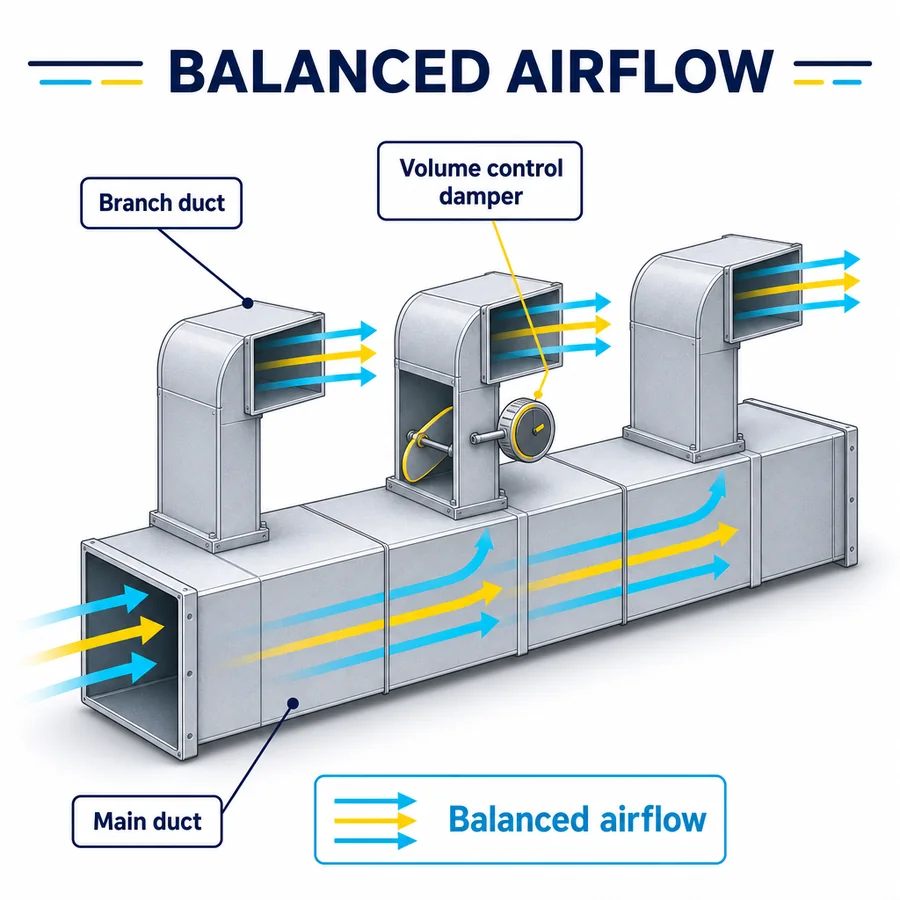
Main duct
Carries supply or extract air through the building before it reaches smaller branches and zones.
Branch routes
Serve rooms, production areas, plant spaces, retail areas, kitchens or extract points with different airflow needs.
Damper access
The damper position needs enough space around it and should remain reachable for adjustment or inspection where required.
The same principle applies whether the project uses rectangular ductwork, spiral ductwork or a mix of both. The duct format, available space, connection details and fitting requirements will influence how the package is put together.
Airflow balancing
How dampers help balance airflow
Air follows resistance
In a building with several branches, one route may naturally receive more air because it is shorter, straighter or has less resistance.
The damper adjusts the branch
Opening the damper allows more air through. Closing it partly restricts the flow, giving the installer or commissioning team a controlled adjustment point.
The system is easier to balance
When used as part of a properly planned system, this can help improve comfort, extraction performance and overall airflow distribution.
When contractors should specify volume control dampers
Volume control dampers are worth discussing early when the ductwork serves more than one branch, room or zone. They are also relevant where supply or extract airflow needs to be balanced after installation, where there are long or awkward duct runs, or where changes in layout may affect how air moves through the system.
That does not replace the project design, but it does make the buying and installation process more joined-up.
Volume control dampers and fire dampers are not the same thing
The names can sound similar, but volume control dampers and fire dampers have different jobs. A volume control damper is about airflow regulation. It helps control how much air passes through a duct branch or zone. A fire damper is a fire-safety component used to help prevent fire from spreading through ductwork where the system passes through fire-resisting elements.
For a separate fire-safety overview, see the CVK guide to fire dampers. This article stays focused on airflow control, where VCDs help the system balance supply or extract air.
Package planning
Planning a ductwork package around dampers and accessories
A well-planned ductwork package is not only a list of straight duct lengths. It brings together the duct sections, branches, bends, supports, grilles, dampers, flanges, fixings and other accessories needed for the installation.
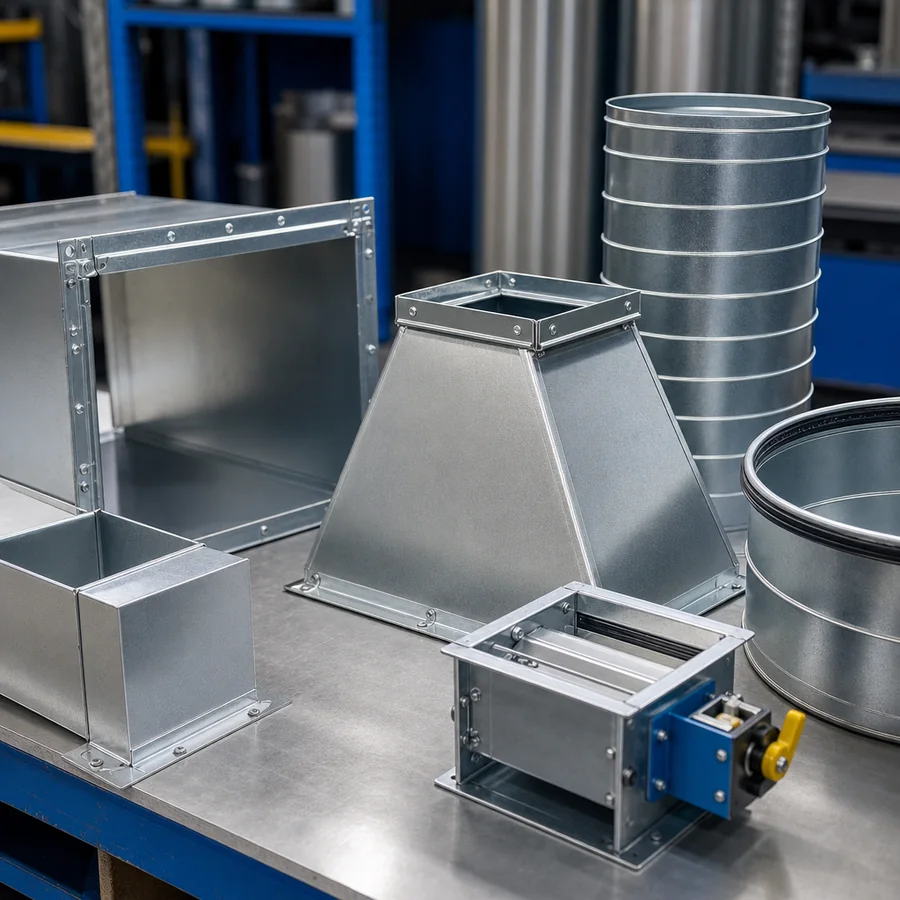
CVK’s ductwork services and associated components cover manufacturing and distribution, including stocked fittings and associated accessories. The clearer the information, the easier it is to avoid missing pieces, awkward substitutions or late changes that slow the installation down.
Avoidable project snags
Common mistakes to avoid
Leaving balancing too late.
If damper positions are not considered until after manufacture or installation, access and coordination can become harder.
Treating all dampers alike.
A volume control damper, fire damper, smoke damper and non-return damper are not interchangeable.
Forgetting access.
If a damper may need adjustment or inspection, it should not be hidden where nobody can practically reach it.
Splitting the package awkwardly.
A missing damper, flange, grille or fixing can delay an otherwise straightforward installation.
How CVK can support the ductwork package
CVK Ductwork works with commercial and industrial ductwork buyers who need practical manufacturing, distribution and delivery support. Our homepage sets out the wider ductwork fabrication and distribution route, including in-house manufacturing, warehouse stock and delivery capability.
For projects that include volume control dampers, the safest approach is to treat them as part of the wider ducting package, with the drawings, duct formats, fittings and site requirements reviewed together.
Plan the package early
Planning a commercial ductwork package?
Speak to CVK about ductwork fabrication, fittings, dampers and delivery support for your project. We can help turn the project information supplied into a practical ductwork and distribution conversation before it reaches site.
Quick FAQs for project teams
Do volume control dampers increase airflow?
Not by themselves. They regulate airflow through a branch or section. The fan and system design drive the air movement; the damper provides an adjustment point.
Can a volume control damper replace a fire damper?
No. They have different purposes. A VCD is for airflow regulation, while a fire damper is part of fire-safety compartmentation requirements where specified.
Should dampers be planned before ductwork manufacture?
Yes, where they are part of the project specification. Their position, access and connection details can affect the ductwork package.
Can dampers be supplied with other ductwork accessories?
Where the project requires them, they can be coordinated with ductwork, fittings and associated components as part of the supply conversation.