In a busy commercial kitchen, heat, steam, smoke and grease-laden air are produced continuously. Without a well-designed extraction system, that air can quickly affect comfort, cleanliness and safety.
Good ductwork does more than move air from one point to another. It supports capture at the canopy, controls airflow through the system and helps grease travel safely to the right collection and cleaning points.
Why grease and heat need controlled extraction
Commercial cooking produces a mixture of warm air, moisture, odours, combustion products and airborne grease particles. The exact load depends on the cooking equipment, menu, hours of use and kitchen layout, but the principle is the same: contaminated air needs to be captured close to the source and removed efficiently.
If extraction is poorly designed, grease can settle on surfaces, heat can spill into the working area and odours can spread beyond the kitchen. Over time, grease deposits inside ductwork can also make cleaning more difficult and increase fire risk. This is why commercial kitchen ventilation systems should be considered as a complete route, from canopy to discharge point.
The ductwork is central to that route. It must carry warm, grease-laden air while maintaining suitable airflow, limiting leakage and allowing access for inspection and cleaning. Fabrication quality, jointing, support and installation all affect how well the system performs in daily use.
How the canopy and ductwork work together
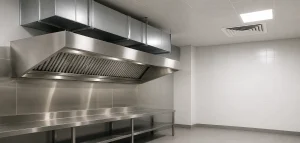
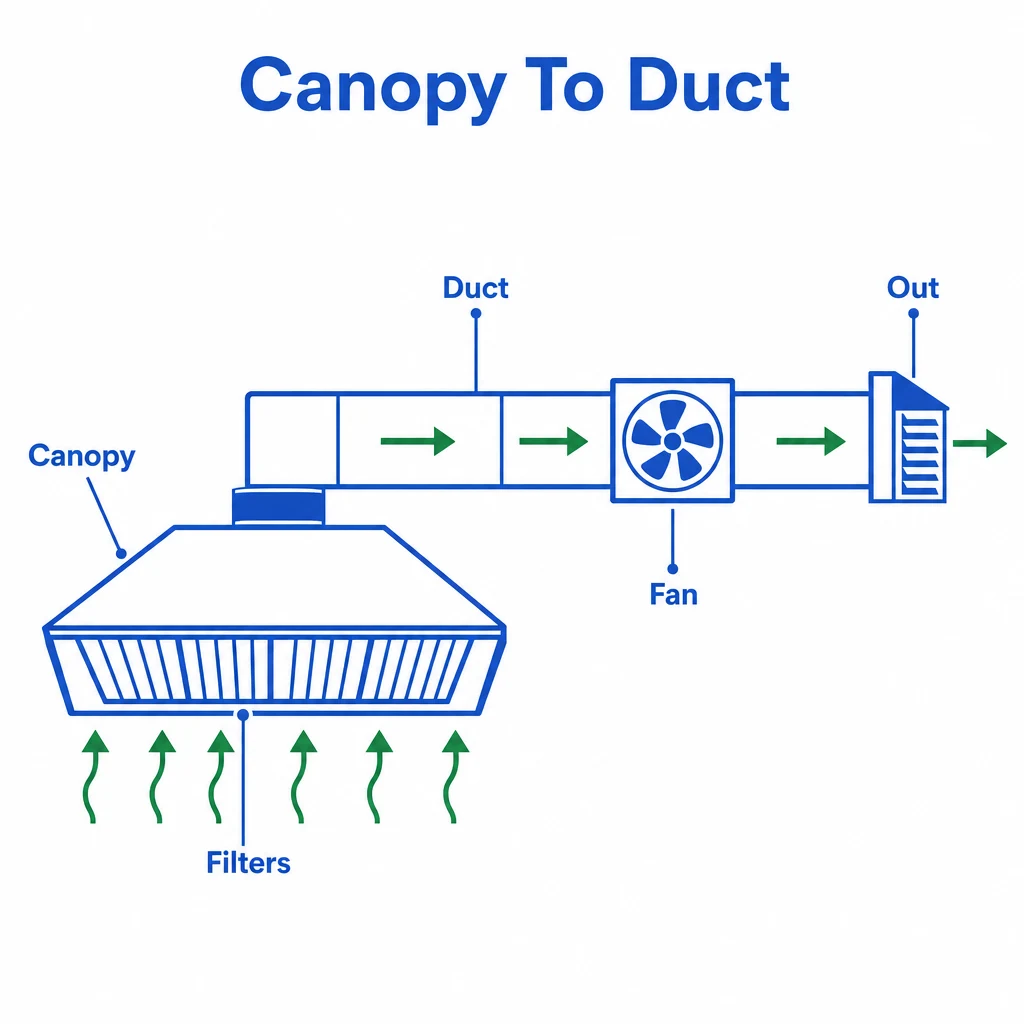
The extraction canopy is the first point of capture. Its role is to collect the rising thermal plume above cooking equipment before it spreads across the room. However, even a good canopy cannot perform properly if the connected ductwork restricts airflow or creates poor air balance.
The duct route should be designed to keep air moving smoothly. Sharp changes of direction, unsuitable duct sizes or unnecessary restrictions can reduce capture performance and increase noise. In contrast, a well-planned route helps the fan draw air evenly through filters and into the duct system.
Filters help remove some grease from the airstream before it enters the ductwork, but they do not remove everything. Fine grease particles and vapour can still pass through, especially during high-temperature cooking. That makes duct construction and cleanability important parts of the overall design.
For buyers comparing kitchen extraction systems, it is worth looking beyond the visible canopy. The hidden ductwork, dampers, access panels and discharge arrangement all influence long-term performance.
The ductwork features that help control grease
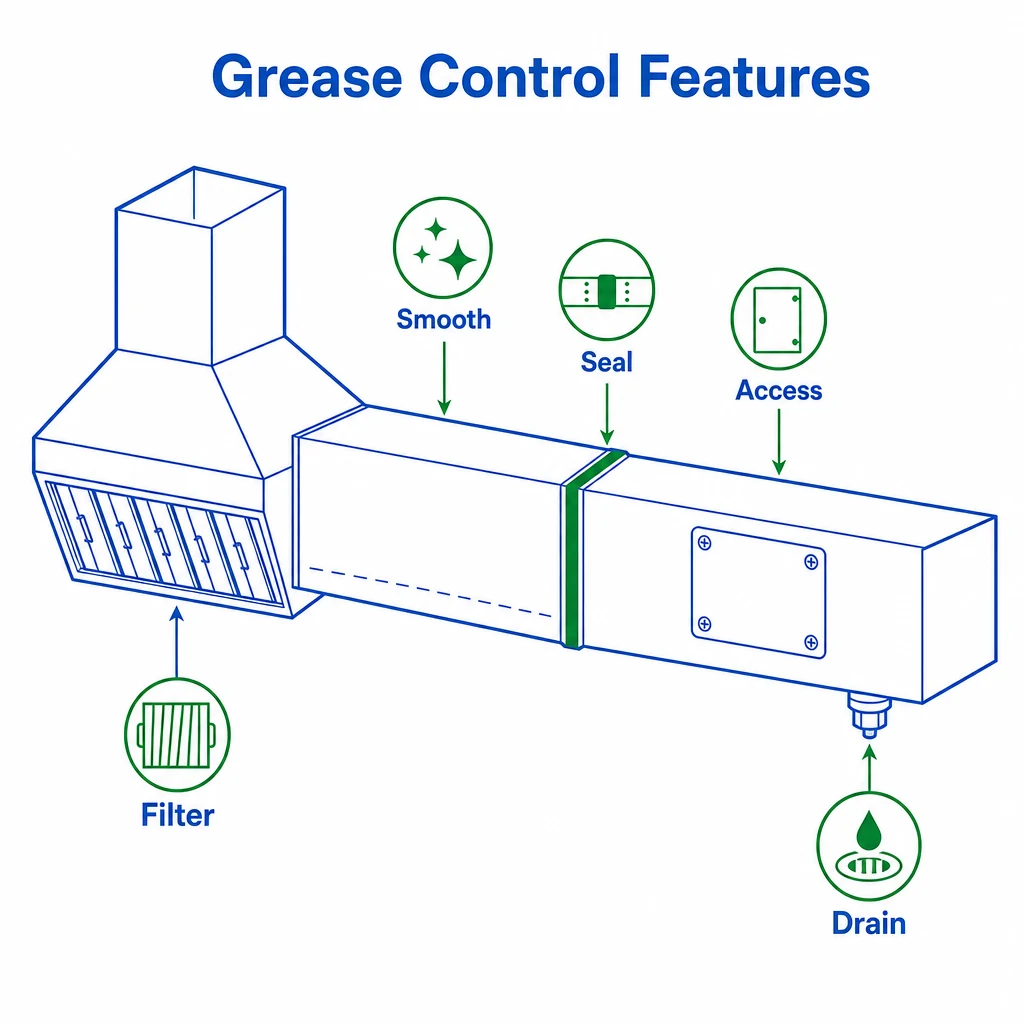
Grease control starts with a duct route that supports consistent air velocity. If the air moves too slowly, grease may settle more readily. If the system is poorly balanced, some areas may pull too much air while others underperform. The goal is a practical design that suits the cooking load, equipment position and available building space.
Common features that support effective grease management include:
- Appropriate duct sizing: The duct should be sized to move the required air volume without avoidable resistance.
- Smooth internal routes: Cleaner transitions and fewer unnecessary bends help reduce turbulence and areas where grease can collect.
- Durable fabrication: Strong sheet-metal ductwork helps maintain shape, alignment and joint integrity.
- Sealed joints: Good jointing helps contain grease-laden air and reduces leakage into ceiling voids or service areas.
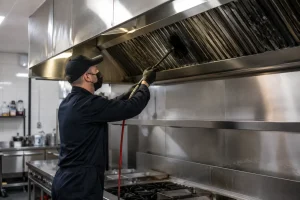
- Cleaning access: Access points should be included where inspection and cleaning will be required.
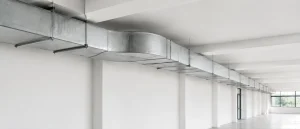
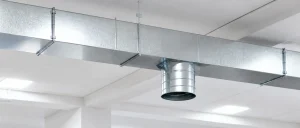
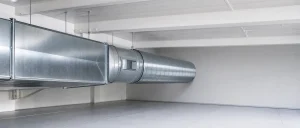
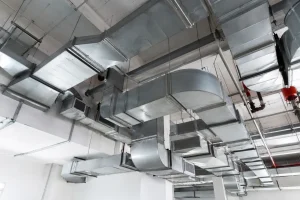
In many commercial buildings, rectangular ductwork is useful because it can fit around structural constraints, ceiling voids and plant areas while maintaining the airflow path needed for extraction. Spiral ductwork may also be suitable in some ventilation layouts, depending on the project requirements.
Managing heat, comfort and air balance
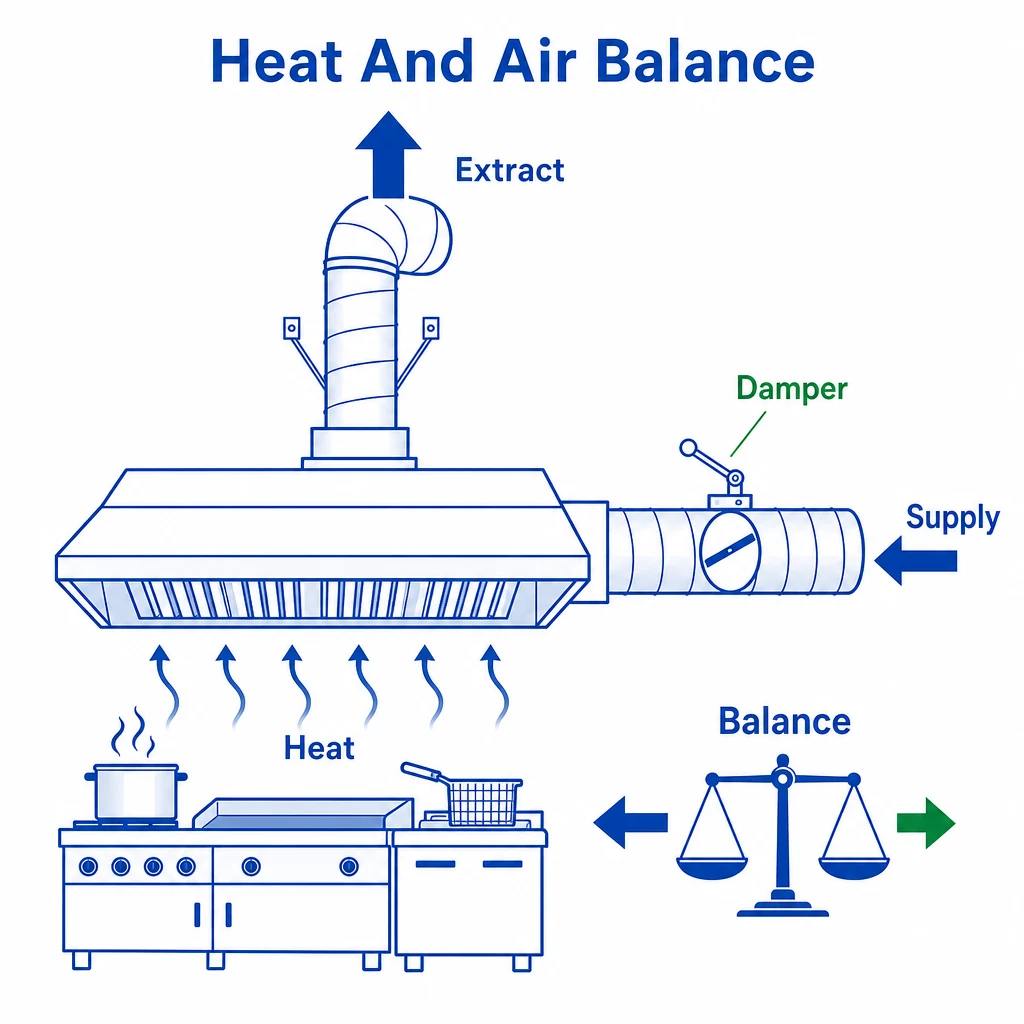
Extraction ductwork removes more than grease. It also carries heat away from cooking equipment, helping to make the kitchen environment more manageable for staff. When heat is captured effectively at the source, the room is less likely to feel oppressive and adjacent areas are less likely to be affected by cooking fumes.
However, removing air from a kitchen means replacement air must come from somewhere. If make-up air is not considered, the kitchen can become negatively pressurised. Doors may become harder to open, draughts may appear, and the extraction system may struggle to perform as intended.
A balanced ventilation approach considers both extract and supply air. Volume control dampers can help regulate airflow through different branches of the system, especially where multiple canopies or ventilation routes are connected. They are not a substitute for good design, but they are a useful part of commissioning and balancing.
Heat control is also affected by the discharge route. Extracted air needs to be moved to a suitable external point, away from fresh air intakes and areas where odours or heat could cause nuisance. The ductwork layout should support that route safely and efficiently.
Why fabrication and installation quality matter
Kitchen extraction ductwork works in demanding conditions. It may be exposed to warm air, grease, vibration, cleaning activity and long operating hours. This is why fabrication quality is not just an appearance issue; it affects the system’s ability to remain reliable and serviceable.
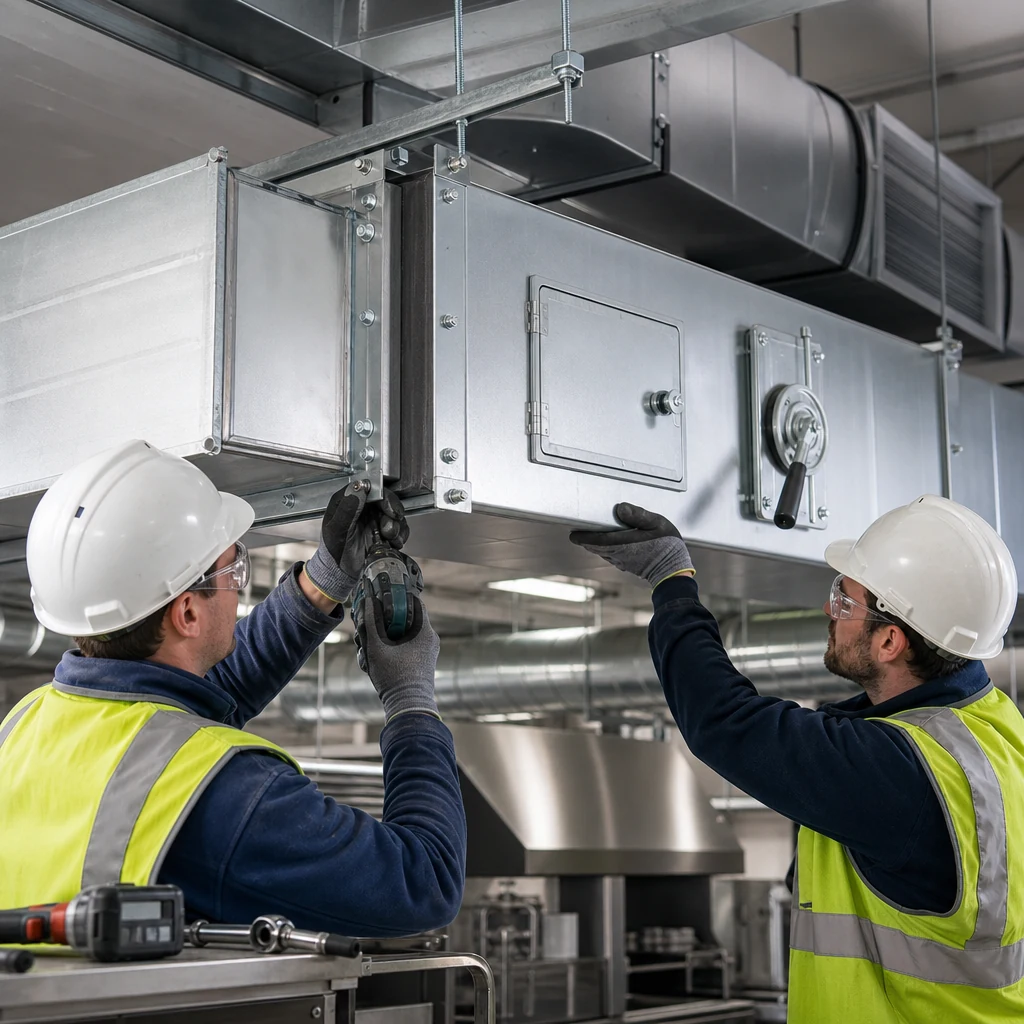
Well-made ductwork should be correctly measured, accurately fabricated and installed with suitable supports. Sections should align properly, connections should be secure, and the system should allow for access where maintenance teams need it. A clean installation also makes it easier to identify components and carry out future inspections.
Installation quality matters around canopies, fans, dampers and transitions. Poorly fitted sections can create leakage, reduce airflow or make cleaning access awkward. A professional approach helps the system perform as designed and supports ongoing maintenance.
For the buyer, this means the best value comes from considering the whole system early. Kitchen layout, cooking equipment, canopy position, duct route, fan selection and access requirements should be coordinated before fabrication begins. That reduces compromises on site and helps create a cleaner, more effective installation.
What to check when planning a commercial kitchen extraction system
Before ordering or upgrading extraction ductwork, it helps to gather practical information about the kitchen and how it will be used. This gives the design and fabrication team a clearer picture of the airflow, grease load and space constraints involved.
Useful points to review include:
- The type and position of cooking equipment under each canopy.
- The expected cooking intensity and operating hours.
- The available route for ductwork from canopy to discharge point.
- Any ceiling voids, structural obstacles or service clashes.
- Where fans, dampers and access panels can be safely located.
- How the system will be inspected, cleaned and maintained.
It is also worth thinking about future changes. If the kitchen may add equipment later, early discussion can help avoid a layout that is difficult to adapt. A good extraction system should suit the current kitchen while allowing sensible maintenance access throughout its working life.
- Commercial kitchen extraction ductwork removes grease-laden air, heat, steam and odours from the cooking area.
- Good design depends on canopy capture, correct duct sizing, balanced airflow and suitable discharge.
- Fabrication quality, sealed joints and cleaning access all support safer, cleaner operation.
- Volume control dampers can help fine-tune airflow where systems have multiple branches or canopies.
- Planning the duct route early helps avoid restrictions and supports easier maintenance.
Frequently asked questions
Does a kitchen canopy remove all grease before air enters the ductwork?
No. Canopy filters help remove grease, but fine particles and vapour can still pass into the ductwork. That is why duct design, sealing and cleaning access are important.
Why does airflow balance matter in a commercial kitchen?
Balanced airflow helps the canopy capture heat and fumes properly. If extract or replacement air is poorly controlled, the kitchen may feel draughty, hot or difficult to manage.
Is rectangular ductwork suitable for kitchen extraction?
Yes, rectangular ductwork is often used where space is limited or a route needs to fit around building features. The right choice depends on the layout and airflow requirements.
How can I make a kitchen extraction system easier to maintain?
Include practical access points, avoid unnecessary route complexity and ensure components are installed where inspection and cleaning teams can reach them safely.
Planning kitchen extraction ductwork?
CVK Ductwork can help with professionally fabricated ductwork and ventilation installations for commercial kitchen environments.