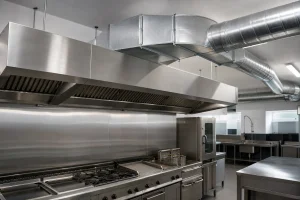
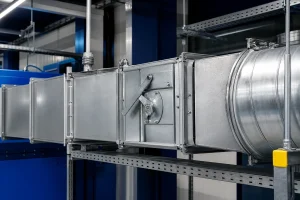
Commercial kitchen extraction is only half of the airflow story. If air is being removed above cooking equipment, replacement air needs to enter the space in a controlled way so the system can capture heat, grease laden vapour and odours properly.
When make up air is overlooked, the kitchen can become hot, draughty, noisy and difficult to work in. A balanced approach to extraction and ventilation helps the canopy, ductwork and wider building airflow work together.
What make up air means in a commercial kitchen
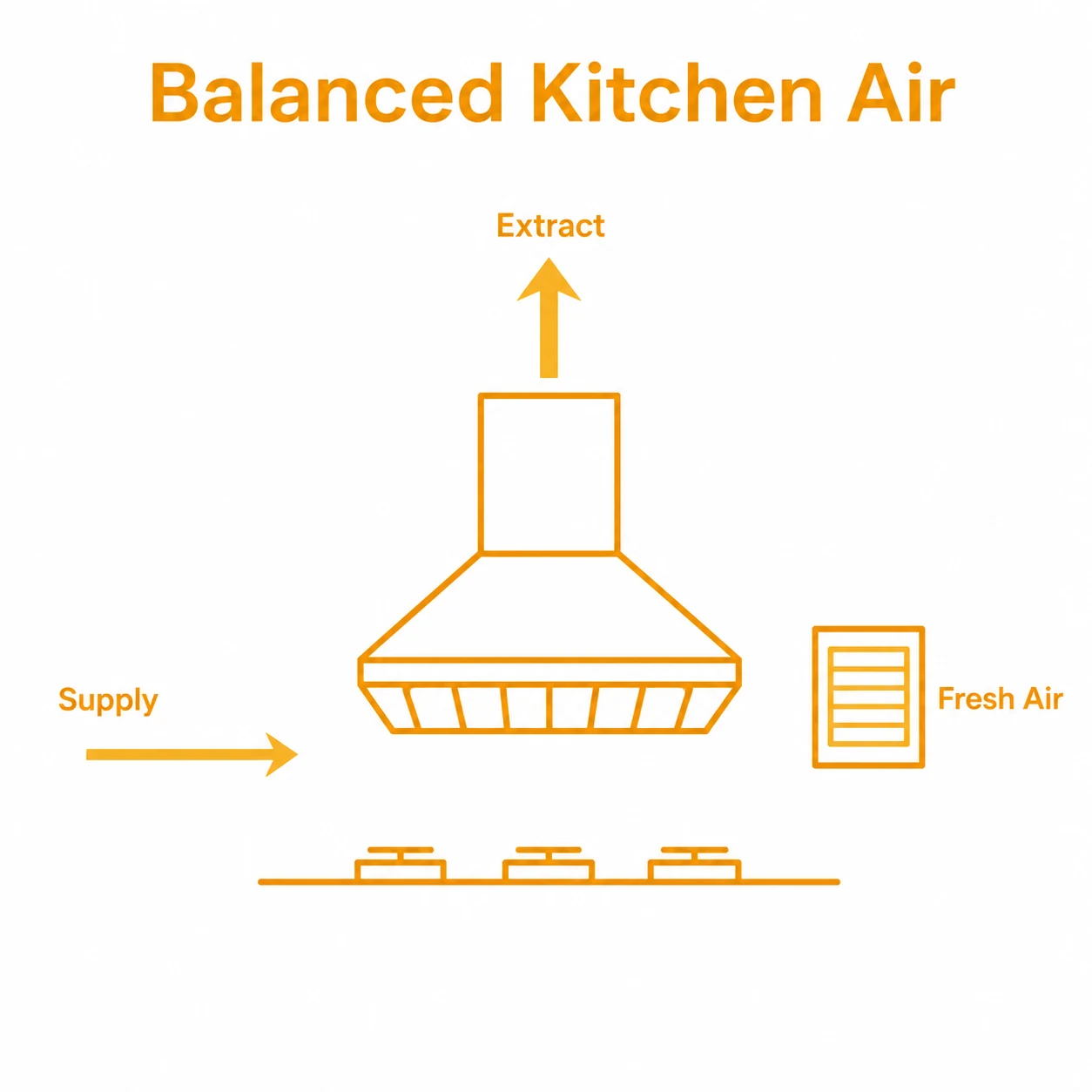
Make up air is the replacement air supplied to a kitchen to balance the air removed by the extraction system. In simple terms, every litre of air pulled out through a canopy and duct run needs to be replaced from somewhere.
If replacement air is not planned, the kitchen will still try to draw air in. It may pull it through door gaps, serving hatches, corridors, poorly sealed openings or adjacent rooms. That uncontrolled air movement can interfere with the capture zone around the canopy and make extraction performance less predictable.
Good make up air design considers how much air is needed, where it should enter, how fast it should move and how it affects staff comfort. The aim is not simply to push air into the room, but to support the natural movement of heat and cooking vapour towards the extraction canopy.
This is why kitchen extraction and ventilation should be considered together. A canopy may be correctly sized, and the ductwork may be neatly installed, but poor replacement air can still make the system feel underpowered in daily use.
Why extraction struggles without balanced replacement air
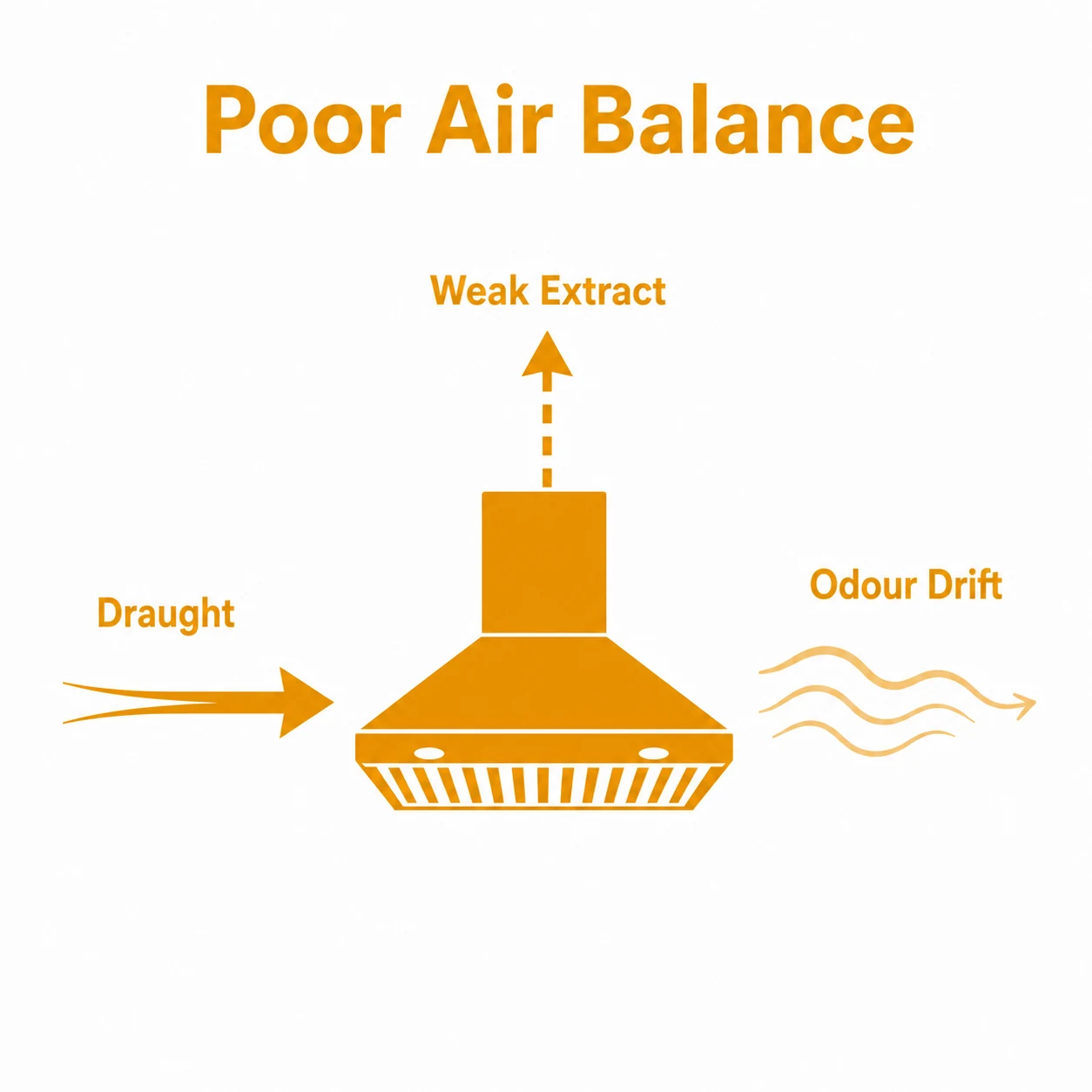
A commercial kitchen extraction system creates negative pressure as it removes air from the space. Some negative pressure can be expected, but too much can cause practical problems across the kitchen and surrounding areas.
One common issue is poor capture. If air rushes into the kitchen from the wrong direction, it can disturb the upward movement of heat, steam and grease laden vapour. Instead of rising cleanly into the canopy, that plume can spill out into the room. Staff may then notice lingering heat, smells or visible vapour even when the fan is running.
Another issue is comfort. Uncontrolled air can create draughts near doors, cold spots around preparation areas and hot pockets close to cooking equipment. The extraction system may seem to be working harder, but the kitchen still feels uncomfortable because the airflow pattern is fighting itself.
Pressure imbalance can also affect doors, hatches and connected spaces. Doors may become harder to open, air may be pulled from customer or staff areas, and smells can travel in unwanted directions. These symptoms often point to a system that needs better coordination rather than simply more extraction.
For kitchens reviewing their set up, CVK Ductwork provides commercial kitchen extraction systems that can be considered alongside the ventilation requirements of the wider space.
How make up air improves canopy capture
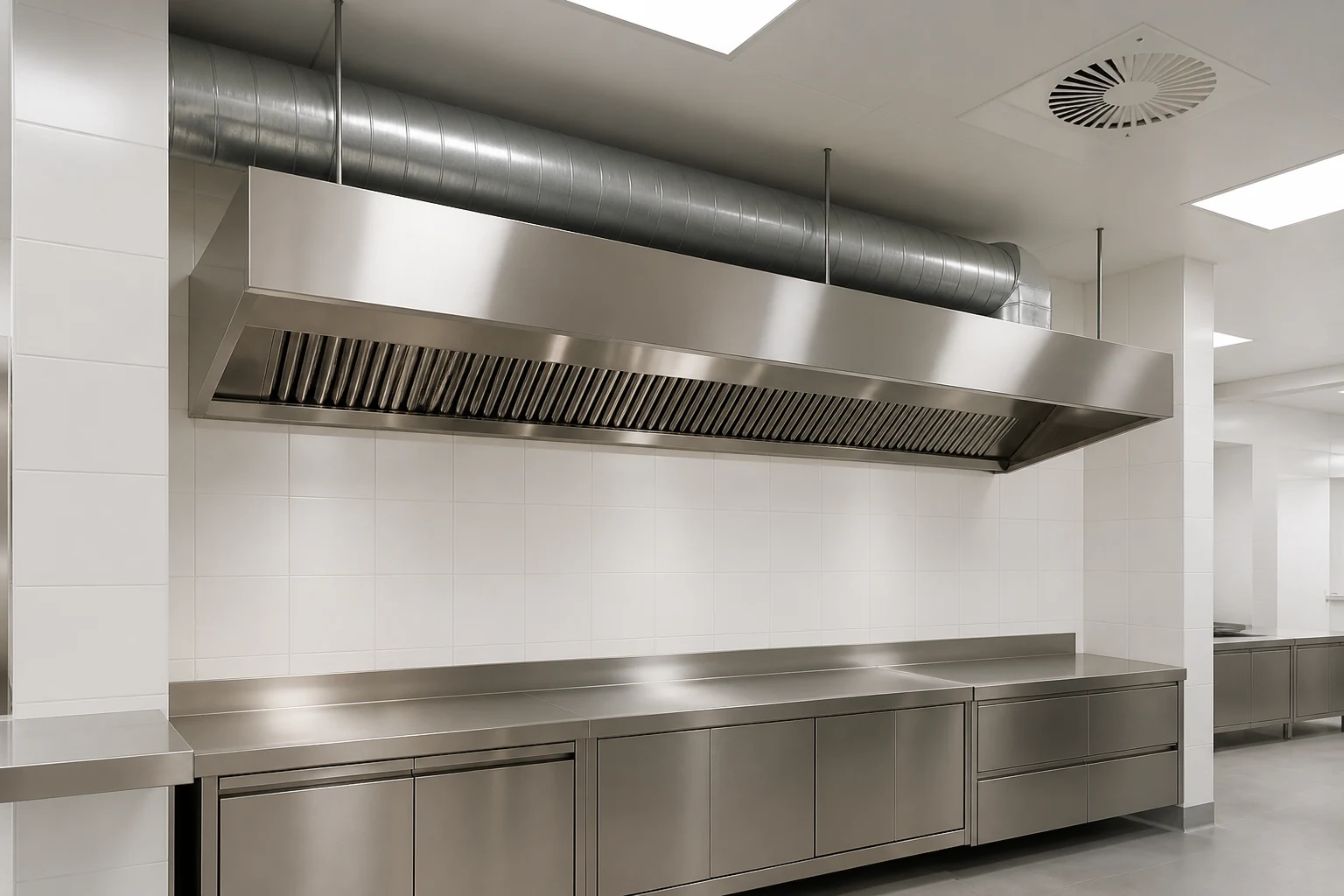
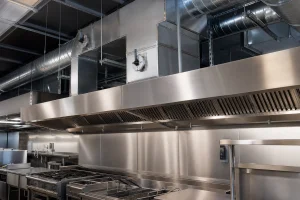
The canopy relies on stable airflow around the cooking line. Heat from cooking equipment rises, carrying vapour, odour and grease particles with it. The extraction system needs to draw that plume into the canopy before it spreads into the kitchen.
Make up air supports this by replacing extracted air in a controlled way. When supply air is introduced thoughtfully, it helps maintain the pressure conditions that allow the plume to rise cleanly. The kitchen feels more settled because the system is not dragging air through random gaps or across the cooking process.
The position of the supply air matters. Air introduced too quickly or too close to the canopy can blow across the cooking line and push contaminants away from the capture zone. Air introduced too far away, or with no clear path, may fail to support the extraction system where it is most needed.
The right balance depends on the layout, equipment, canopy type, duct routes and fan performance. It also depends on how the kitchen is used during busy periods. A system that works when one appliance is operating may behave differently when the full cooking line is in use.
For a closer look at how the extraction path manages cooking by products, the article on how extraction ductwork controls grease and heat explains the role of ductwork after air has entered the canopy.
The link between heat control and working comfort
Heat build up is one of the clearest signs that extraction and make up air are not working in harmony. Cooking equipment releases heat continuously, and extraction removes a large amount of that heat from the room. If replacement air is uncontrolled, the kitchen can still feel heavy, hot and uneven.
Balanced airflow helps reduce stagnant zones where heat collects. It also helps avoid uncomfortable draughts that can occur when air is pulled sharply through doorways or openings. Staff need a working environment where air movement feels steady rather than disruptive.
Comfort matters because kitchens are active spaces. People move between cooking, preparation, cleaning, storage and service areas. If the ventilation design creates awkward airflow paths, staff may work around the system rather than with it, leaving doors propped open or changing how the space is used. Those everyday workarounds can reduce extraction performance further.
Make up air also affects odour control. When the kitchen pressure relationship is unmanaged, smells may escape into neighbouring areas. A coordinated design helps air move in the intended direction, from cleaner areas towards the extraction point, then safely away through the ductwork route.
Where canopy layout is part of the question, it is useful to understand how canopies and ductwork connect in a commercial kitchen extraction system, because capture performance depends on both the visible canopy and the hidden airflow route.
What to consider when planning make up air
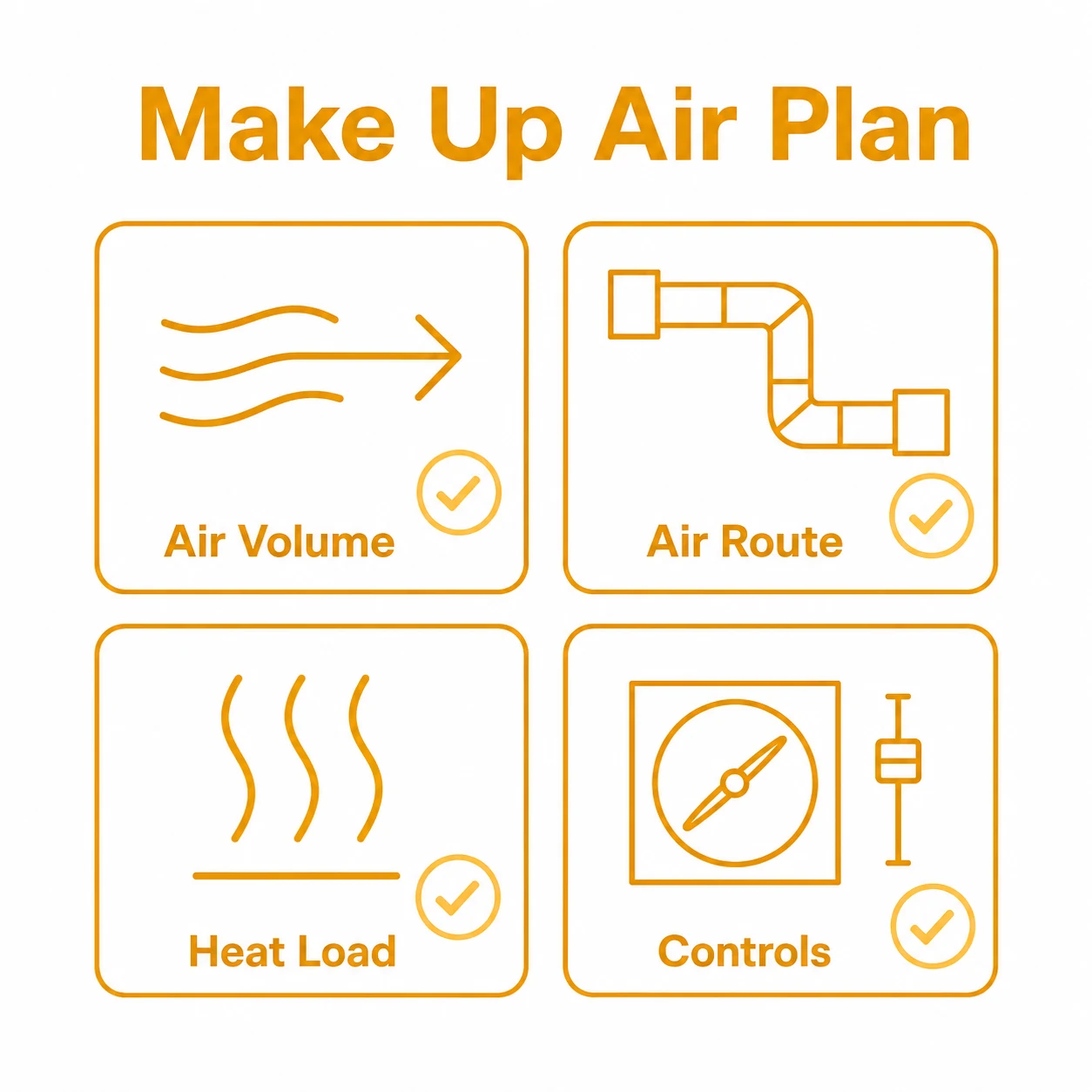
Effective make up air starts with the extraction demand. The amount of air removed through the canopy must be understood before replacement air can be planned properly. This includes the cooking equipment, the canopy arrangement, the expected duty and the ductwork design.
The next consideration is where the replacement air should come from. It may be supplied through dedicated ventilation ducting, transferred from adjacent spaces or delivered through a wider building ventilation system. The best route depends on the building layout and the needs of the kitchen.
Air speed is just as important as volume. Supplying enough air on paper is not enough if it enters the kitchen in a way that disrupts the canopy. Lower velocity, well placed supply air is often more comfortable and less likely to interfere with extraction than a concentrated blast of air.
Temperature should also be considered. Replacement air that is too cold can create discomfort, while air that is too warm may do little to relieve heat build up. The solution should suit the use of the kitchen and the expectations of the people working in it.
Finally, the design should allow for access, cleaning and future maintenance. Duct routes, dampers and grilles need to be practical as well as technically sound. Components such as volume control dampers can help fine tune airflow once the system is installed and commissioned.
For broader context on supply and extract routes, CVK Ductwork also works with ventilation ducting for commercial systems, which is often part of creating a balanced kitchen environment.
Why coordinated design gives better results than isolated upgrades
When a kitchen feels too hot or smoky, it can be tempting to focus only on the extraction fan or canopy. In some cases, those parts may need attention. However, increasing extract without considering make up air can deepen the pressure imbalance and create new comfort issues.
A coordinated approach looks at the full airflow path. That means the canopy, extract ductwork, supply air, dampers, discharge route and building pressure all need to be understood together. The result is a system that performs consistently rather than relying on one component to compensate for another.
This approach also helps avoid common installation problems. Ductwork needs to be sized, routed and sealed correctly. Dampers need to be accessible. Supply air points need to suit the working layout. Fans need to be selected for the actual resistance in the system. Each part affects the next.
For existing kitchens, a review of airflow symptoms can be valuable. Signs such as canopy spill, persistent heat, odour movement, door pressure issues and uneven staff comfort can all help identify where the balance is wrong. For new installations, considering make up air early gives the design a better foundation from the start.
The strongest kitchen ventilation systems are not just powerful. They are balanced, controllable and suited to the real operation of the space.
- Commercial kitchen extraction needs controlled replacement air because extracted air must be replaced from somewhere.
- Poor make up air can cause canopy spill, heat build up, draughts, odour movement and pressure problems.
- Supply air should support the movement of cooking vapour into the canopy, not disrupt it.
- Extraction, ductwork, ventilation supply and dampers should be designed as one coordinated system.
- Balanced airflow improves performance, comfort and day to day usability in busy kitchen environments.
Frequently asked questions
Is make up air always needed for commercial kitchen extraction?
Yes, replacement air is always needed in some form because extraction removes air from the kitchen. The key question is whether that air is supplied in a controlled way or pulled in through gaps and nearby spaces.
Can stronger extraction solve heat and odour problems on its own?
Not always. More extract can help only if the rest of the system supports it. Without enough controlled make up air, stronger extraction may increase negative pressure and create further airflow problems.
Where should make up air enter the kitchen?
It should enter where it can replace extracted air without blowing across the cooking line or disturbing the canopy capture zone. The best position depends on the layout, equipment, canopy and ductwork design.
Do volume control dampers help with kitchen ventilation balance?
Yes. Volume control dampers can help adjust airflow through parts of the system during commissioning and balancing, making it easier to achieve stable extraction and supply air performance.
Plan a balanced kitchen ventilation system
If you are planning a commercial kitchen extraction installation or reviewing an existing system, CVK Ductwork can help coordinate the extraction and ventilation design so the airflow works as intended.