Airflow is one of the first things a commercial ventilation system has to get right. If air is lost through weak joints, gaps or poorly finished connections, the system can struggle to move air in the way it was designed to.
Duct sealing is not about patching problems after the event. In a well planned installation, it is part of good fabrication, careful fitting and proper commissioning, helping the whole air duct ventilation system perform consistently from the plant connection to the final grille, canopy or extract point.
Why duct sealing matters to commercial airflow
A ventilation duct is only useful if it can carry air from one point to another with control. In commercial and industrial buildings, that usually means moving supply air into occupied spaces, removing stale air, extracting heat or carrying contaminated air away from a process or kitchen area.
Every joint, bend, branch, damper and access point creates a place where air must stay contained. When these details are fabricated and installed well, the system can maintain the airflow expected by the design. When they are loose, distorted or poorly sealed, some of that air can escape before it reaches the intended destination.
Leakage can affect both supply and extract systems. On supply runs, conditioned air may be lost into voids or plant areas instead of reaching the served space. On extract runs, leakage can reduce draw at the point where capture is needed. In both cases, the fan may still be running, but the useful airflow at the working end of the system may be lower than expected.
This is why duct sealing belongs in the same conversation as duct sizing, routing and commissioning. It supports the work already done by the designer and installer, rather than being a separate afterthought. For businesses planning new or replacement commercial ventilation ducting, joint quality and sealing standards should be discussed early.
Where air leakage usually starts
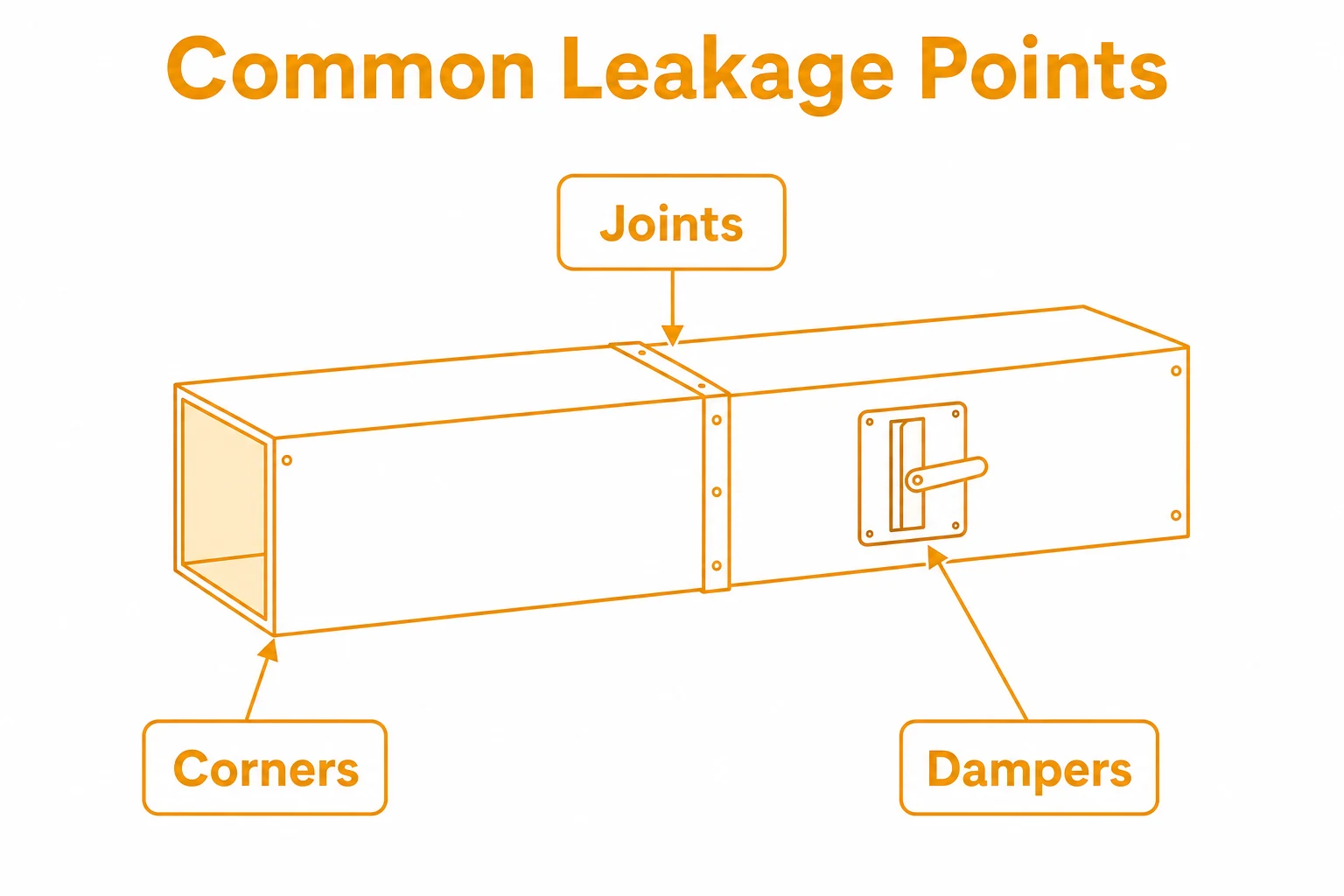
Most leakage does not come from the middle of a straight duct length. It normally starts at the points where pieces meet or where the ductwork has been adapted to suit a building or item of equipment.
Common areas that need attention include:
- Flanged joints between rectangular duct sections
- Slip joints and connections in spiral ductwork
- Branches, reducers and transition pieces
- Connections to fans, air handling units, grilles and canopies
- Damper frames, access doors and inspection panels
- Site made adjustments around structure, services or equipment
None of these details are unusual. They are normal parts of a ventilation duct installation. The difference comes from how accurately the ductwork is made, how carefully it is handled on site and how consistently the installer deals with each connection.
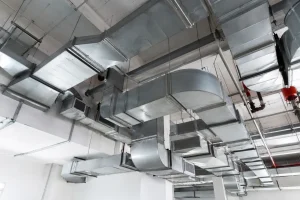
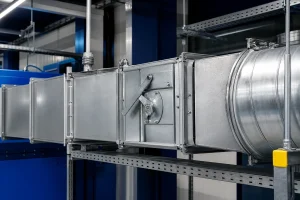
Rectangular ductwork has its own sealing considerations because corners, flanges and larger flat surfaces all need to be controlled. Spiral ductwork can offer efficient runs, but joints, couplers and fittings still need correct engagement and sealing. Volume control dampers also need to be fitted so that airflow can be balanced without creating unwanted leakage around the frame.
Good sealing is therefore not a single product or one visible bead of sealant. It is the result of matched components, clean interfaces, correct fixings and a clear understanding of what the system is expected to do.
How well fabricated ductwork supports sealing
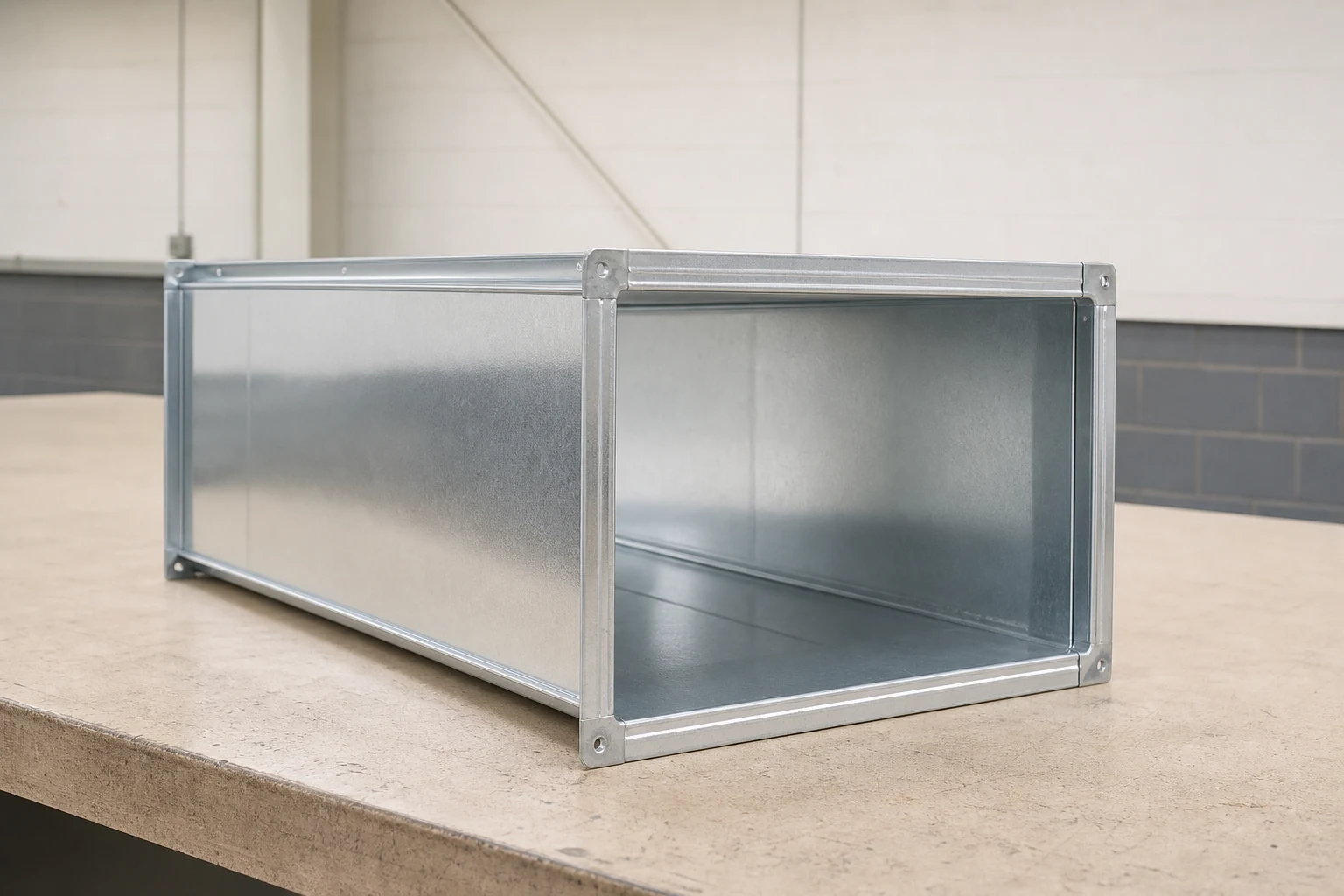
Sealing starts before the ductwork arrives on site. If duct sections are poorly formed, damaged or inconsistent, the installer has less control over the finished joint. Accurate fabrication helps the sections meet cleanly, which makes sealing more reliable.
For rectangular ductwork, this includes square ends, consistent flanges, sound seams and correctly made corners. For spiral ductwork, it includes accurate fittings, suitable couplers and cleanly finished connection points. In both cases, the aim is to create ductwork that goes together neatly and holds its shape during installation.
Fabrication quality also matters when systems include dampers, access panels or kitchen extraction components. These items interrupt the duct run, so their frames and interfaces need the same attention as the duct sections themselves. If they are treated as isolated add ons, air can find weak points around them.
Material choice can also influence the quality of the finished system. The duct material, gauge and fitting type need to suit the environment, airflow and intended use. A useful overview of these decisions is covered in CVK Ductwork’s guide to choosing duct material for a commercial HVAC system.
Good fabrication does not remove the need for careful installation, but it gives the installer a much better starting point. Clean, accurate ductwork is easier to align, seal, support and commission.
Installation details that protect intended airflow
Once ductwork reaches site, installation discipline becomes critical. Even well made duct sections can leak if they are forced into position, poorly supported or connected without enough attention to alignment.
Installers need to think about airflow as well as physical fit. A duct run may appear complete, but if joints are strained, supports are uneven or components are not seated correctly, leakage risk increases. Air will always look for the easiest escape route, especially where pressure changes around bends, branches or fan connections.
Important installation details include:
- Keeping mating surfaces clean before sections are joined
- Using appropriate gaskets, sealants or jointing methods for the duct type
- Tightening fixings evenly so joints close consistently
- Supporting ductwork so joints are not carrying avoidable strain
- Checking access panels and damper frames after installation
- Protecting finished ductwork from dents, twisting and site damage
These are professional installation controls, not DIY tips. Commercial ventilation systems often serve occupied workspaces, production areas, kitchens or plant rooms, so the finished ductwork must be suitable for the building and its operational needs.
If the project involves a new system layout, the relationship between design and fitting is important. The article on how to design and install a ventilation duct system explains how routing, sizing and installation choices work together before the system is commissioned.
Why sealing is especially important for extraction
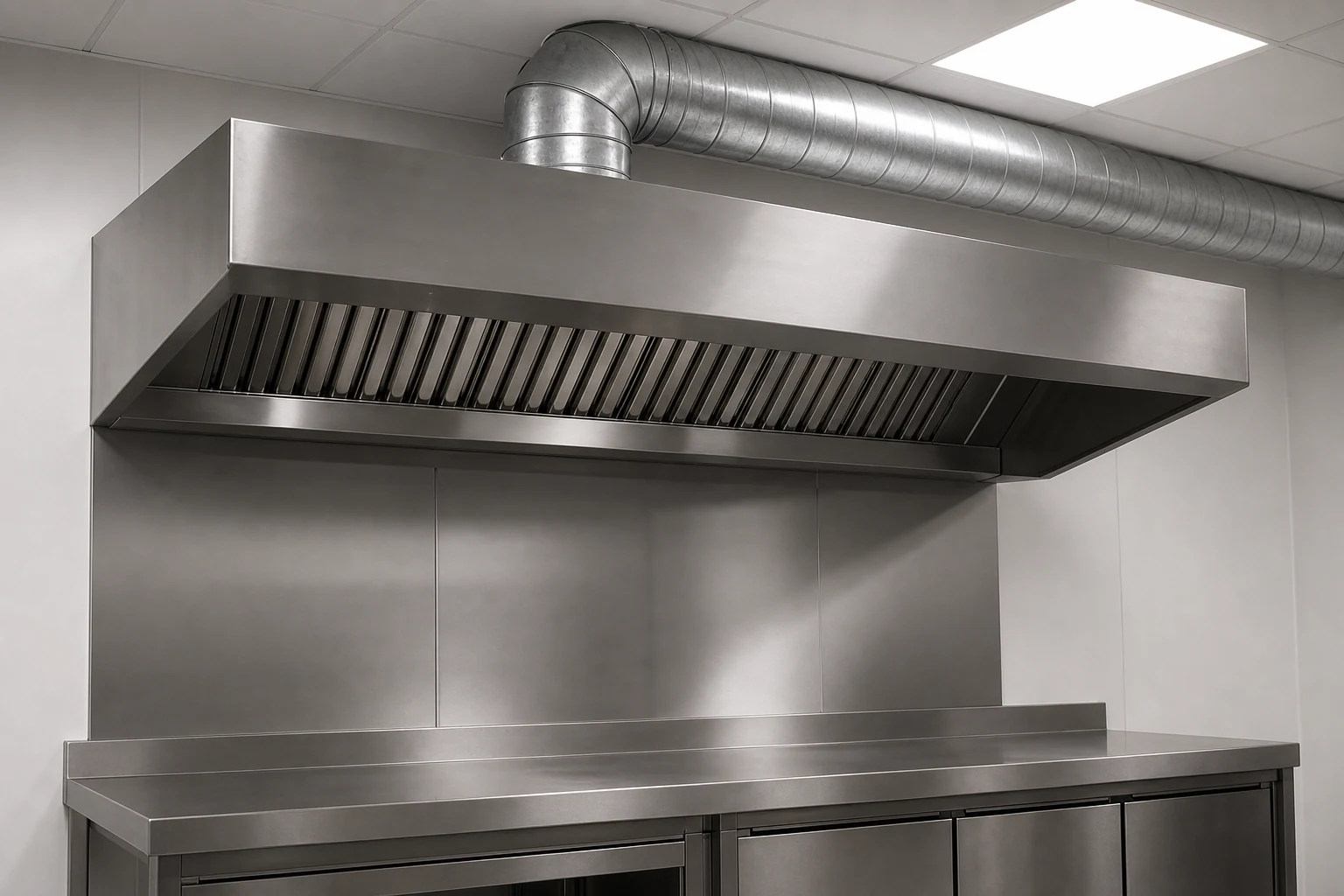
Extraction systems depend on reliable capture. Whether the system is removing warm air, stale air, fumes, grease laden air or process related contaminants, the ductwork has to help maintain draw at the extract point.
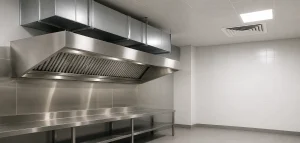
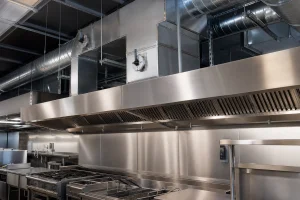
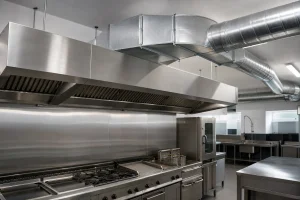
If extract ductwork leaks, air can be pulled from unintended areas of the building or lost through weak connections in the run. This can reduce the effectiveness of the point where extraction is needed most. In a commercial kitchen, for example, canopy performance depends on the relationship between the canopy, ductwork, fan and discharge route.
Sealing is also important because extraction systems often include several components that need to work as one assembly. Canopies, spigots, transitions, dampers, access points and extract fans all create connection points. Each one needs to support airflow, access and safe operation.
For businesses planning or upgrading food service ventilation, CVK Ductwork’s kitchen extraction systems service information gives more context on how canopies and ductwork are brought together for commercial use.
The same principle applies beyond kitchens. Any extract system is only as dependable as the duct route between the capture point and the fan or discharge point. Sealing helps keep that route controlled.
What a good duct sealing approach includes
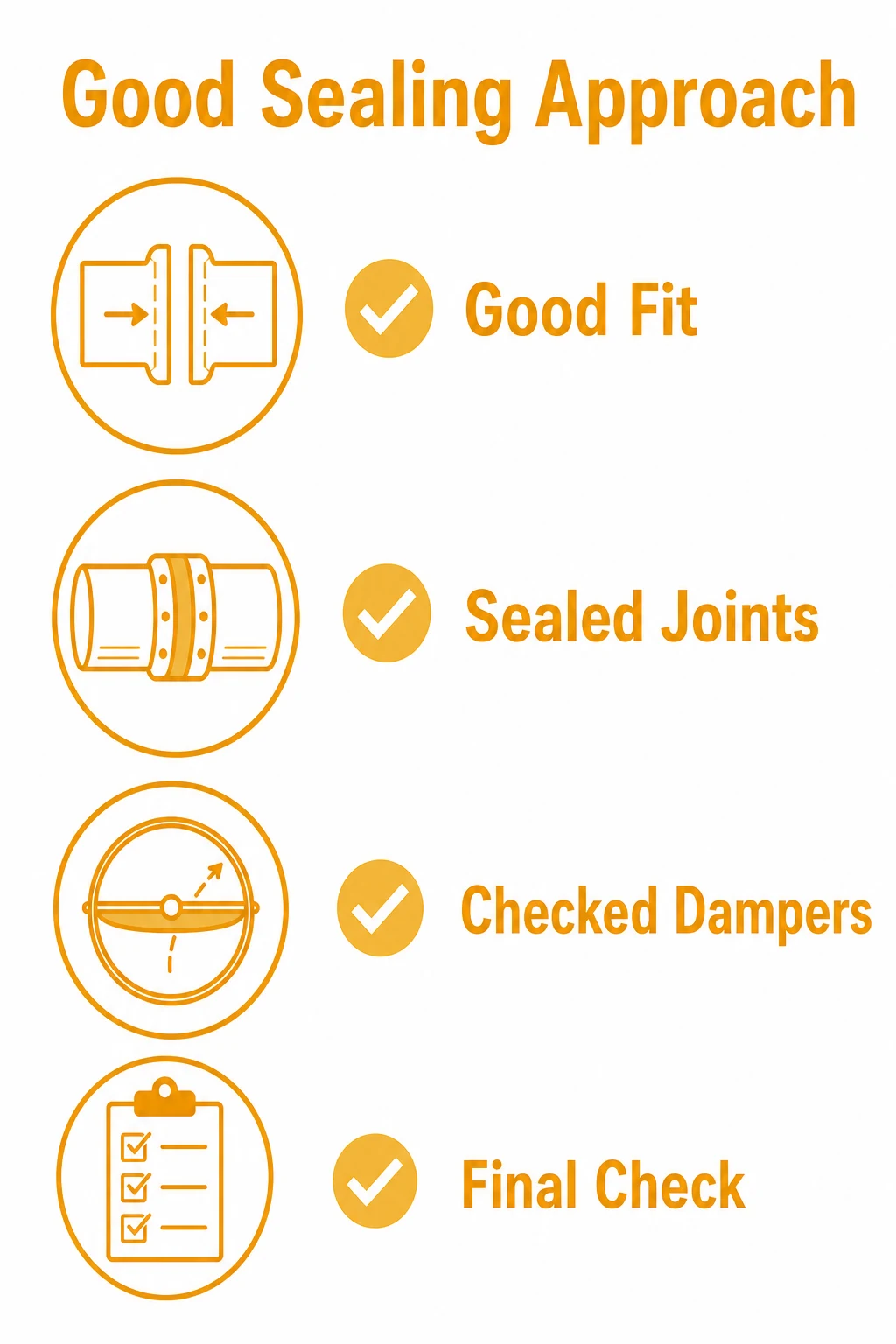
A strong sealing approach is practical, consistent and matched to the system. It does not rely on one visible detail at the end of the job. It is built into how the ductwork is specified, fabricated, delivered, installed and checked.
For a commercial project, that usually means reviewing the duct type, pressure expectations, system use and access requirements before installation begins. The installer then applies suitable jointing methods and checks each connection as the system progresses. This is much more reliable than trying to correct widespread leakage once ceilings, finishes or equipment are already in place.
Commissioning also plays a part. Airflow readings, damper settings and system balancing can reveal whether the ductwork is performing as intended. If the system has been properly sealed, the commissioning process has a better foundation. The balancing engineer can adjust airflow through designed control points rather than compensating for avoidable leakage.
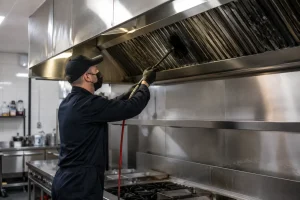
Cleaning and maintenance should not be confused with duct sealing, but they do support system performance over time. Access doors, inspection panels and removable sections should be fitted in a way that preserves airtightness after routine checks. CVK Ductwork’s guidance on maintaining clean airflow in commercial ductwork explains how cleanliness and access sit alongside good system design.
The best result is a ventilation system that feels controlled rather than improvised. Air moves where it is meant to move, dampers can be set with confidence and extraction points have the support they need from the duct route behind them.
- Duct sealing helps a commercial ventilation system maintain the airflow intended by the design.
- Most leakage risk sits at joints, fittings, dampers, access panels and equipment connections.
- Accurate fabrication makes ductwork easier to align, seal and commission on site.
- Extraction systems rely on sealed duct routes to support dependable capture at the working point.
- Sealing should be treated as part of professional ductwork installation, not a DIY repair task.
Frequently asked questions
Is duct sealing the same as ductwork maintenance?
No. Duct sealing is mainly about how joints, fittings and connections are made airtight during fabrication and installation. Maintenance helps keep the system clean, accessible and in good working order after it is in use.
Can poor duct sealing reduce ventilation performance?
Yes. If air escapes through joints or weak connections, the airflow reaching grilles, canopies or extract points may be lower than intended. That can make the system less effective even when the fan is running.
Does spiral ductwork need sealing?
Yes. Spiral ductwork can be efficient and robust, but couplers, fittings, branches and equipment connections still need correct installation and sealing so the system performs as expected.
Should duct sealing be planned before installation starts?
Yes. The best results come when sealing is considered alongside duct type, system design, access requirements and commissioning. It is much easier to build quality into the installation than to chase leakage later.
Plan ventilation ductwork with airflow in mind
If you are planning a commercial ventilation project, CVK Ductwork can help with well fabricated ductwork, careful installation and practical advice on keeping airflow controlled from the start.