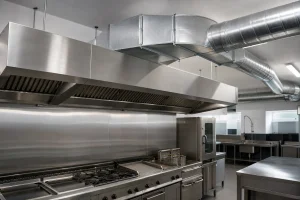
A ducted ventilation system can be well designed, well fabricated and neatly installed, yet still fall short if the air is not balanced across the system. Air will always take the path of least resistance, which means some branches can receive too much airflow while others are left struggling.
Airflow balancing is the process that brings the system back to its intended performance. In commercial ductwork ventilation, it helps supply and extract air reach the right areas in the right quantities, so comfort, indoor air quality and system control all work as intended.
What airflow balancing means in ducted ventilation
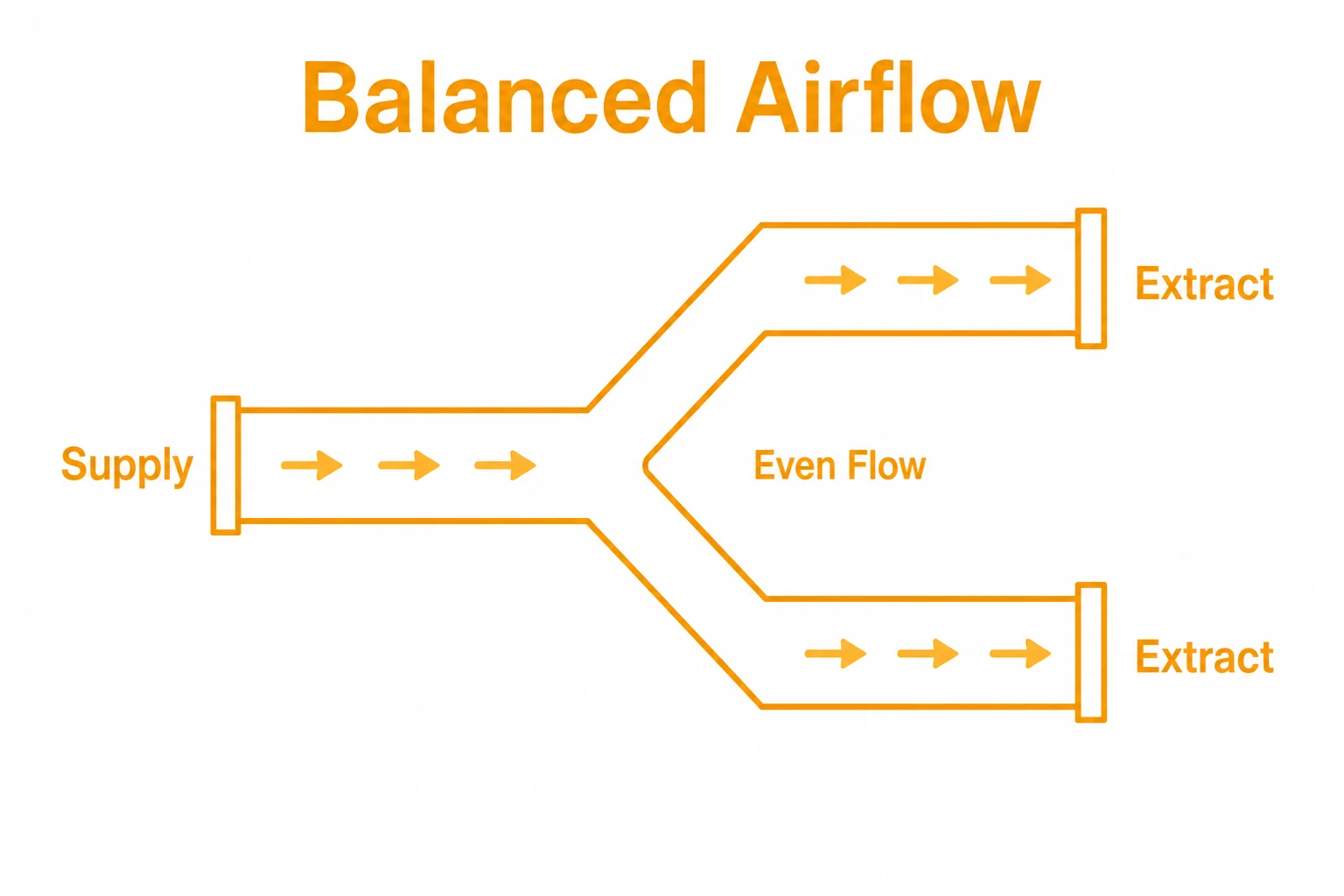
Airflow balancing is the adjustment of air volume through each branch, grille, canopy or terminal point in a ducted ventilation system. The aim is not simply to make air move. The aim is to make it move in the correct proportion across the whole installation.
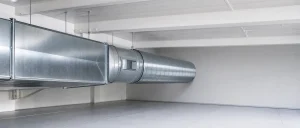
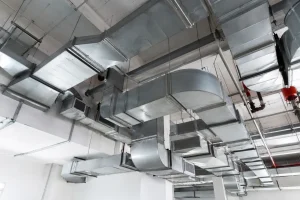
In a typical commercial ventilation duct layout, there may be several branches serving different rooms, zones or processes. Without balancing, the closest or least resistant runs often receive more air than planned. Longer runs, tighter routes or more complex branches may receive less. This can leave one area over ventilated while another is under served.
Balanced ducting ventilation helps the system reflect the original design intent. It supports more even supply air, more reliable extract, steadier pressure relationships and better control at the points where people actually feel or depend on the airflow.
Why unbalanced ductwork causes performance problems
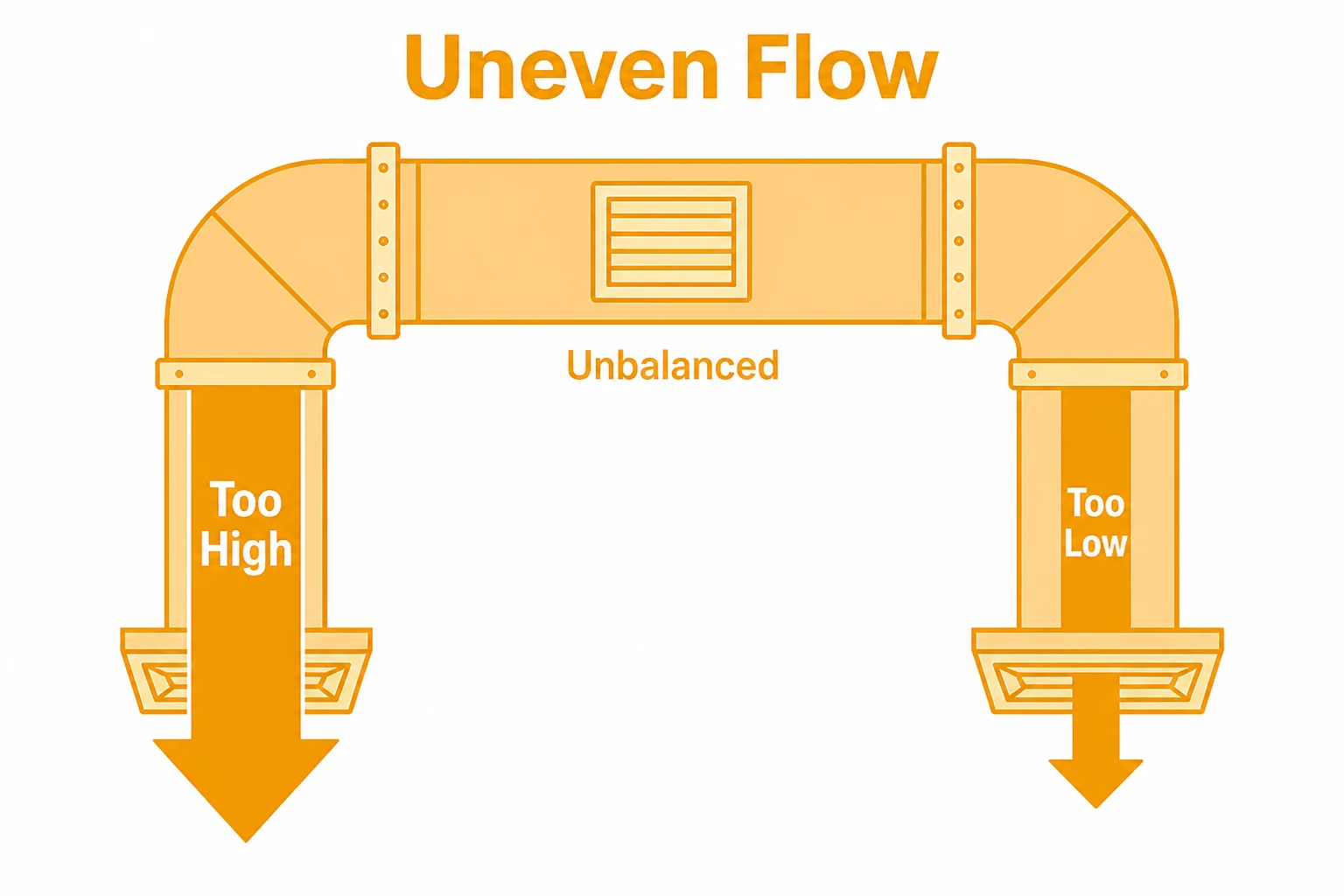
When ductwork ventilation is unbalanced, the problems can show up in several ways. Some are obvious, such as poor extraction, warm areas, cold draughts or doors that are difficult to open because pressure is not behaving as expected. Others are more subtle, such as noisy grilles, uneven air distribution or plant working harder than it needs to.
In supply systems, too much air through one branch can create discomfort and noise, while another area receives too little fresh or conditioned air. In extract systems, weak airflow can allow odours, heat, moisture or airborne contaminants to remain in the space for longer than intended. In process areas, extraction performance may also affect cleanliness and working conditions.
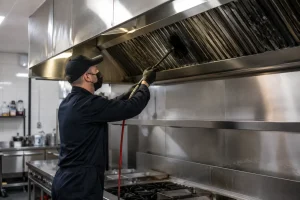
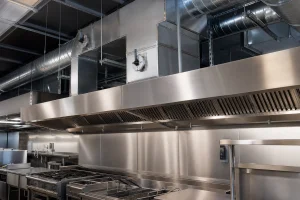
Kitchen environments make this especially important. Extraction has to deal with heat, steam and grease laden air, and the balance between canopy capture, duct route and fan performance matters. Where the installation relates to cooking areas, the same principle applies alongside the wider design of commercial kitchen extraction systems.
Unbalanced airflow can also make future fault finding harder. If the system was never properly set up after installation, later problems may be blamed on fans, grilles or equipment when the issue is really distribution across the ventilation duct network.
How volume control dampers support balancing
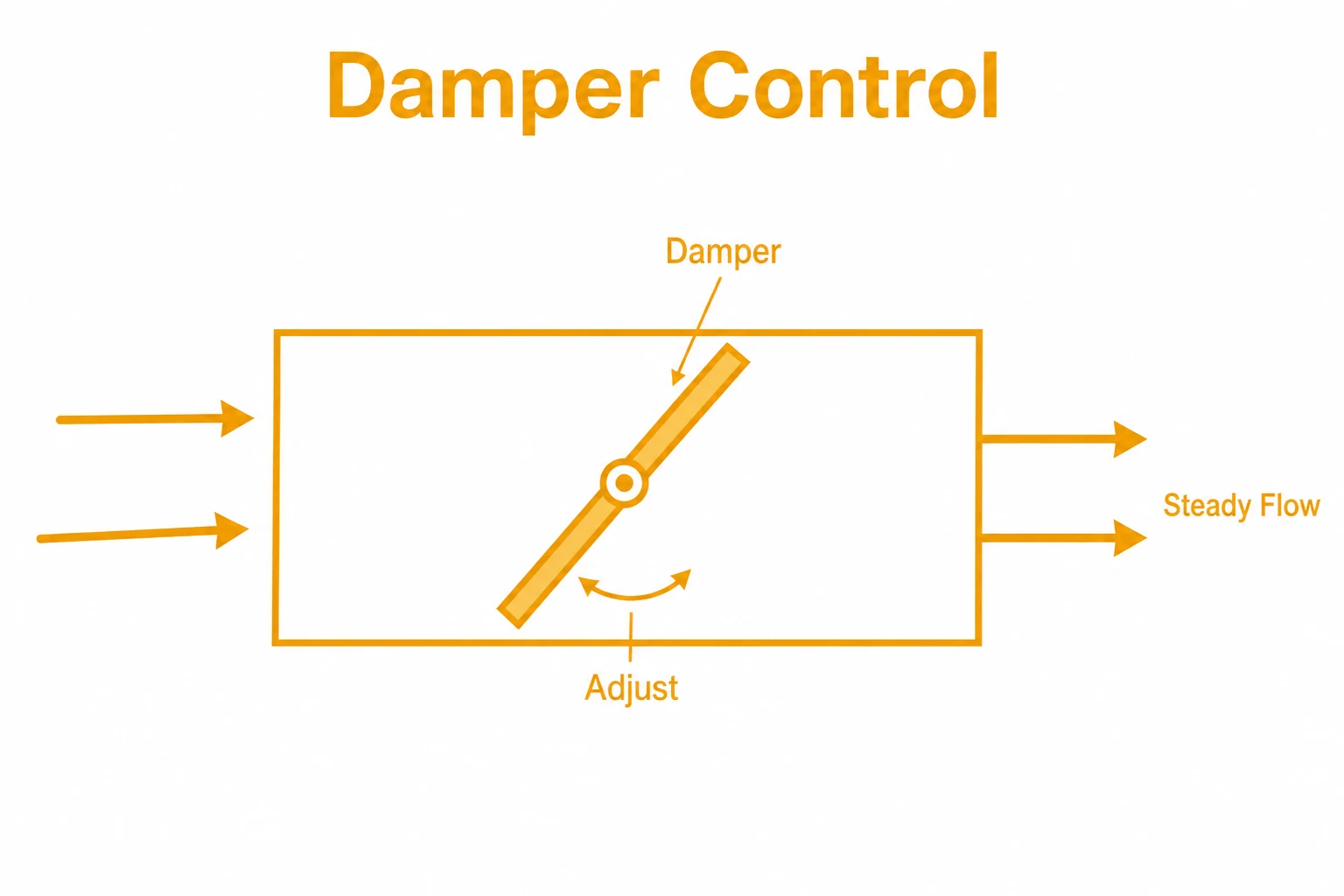
Volume control dampers give installers and commissioning teams a practical way to regulate airflow through individual duct branches. They are fitted within the ductwork so that the amount of air passing through a section can be adjusted. This allows one branch to be restricted slightly while another receives the airflow it needs.
The purpose is controlled adjustment, not arbitrary restriction. A damper should help the overall duct ventilation system reach its design airflow figures. When installed in the right positions, dampers make it possible to balance branches without relying only on fan speed or terminal adjustments.
CVK Ductwork supplies and installs volume control dampers for commercial ductwork as part of ventilation projects where airflow needs to be managed after installation. They are especially useful where several branches share one fan or main duct route.
For readers who want the mechanical principle in more detail, CVK Ductwork also explains how volume control dampers work in commercial ductwork, including their role within supply and extract systems.
The role of commissioning after installation
Balancing normally takes place during commissioning, once the ductwork, fans, terminals and related equipment are installed. At this stage, airflow can be measured and adjusted against the intended design values. Dampers are set, readings are checked, and the system is fine tuned until the distribution is within the required range.
This step matters because real installations always contain practical variables. Duct routes may include bends, transitions, access requirements, branch connections and site constraints. Even with careful design and fabrication, the finished ducted ventilation system needs to be tested as a working whole.
Commissioning also helps confirm that changes in one part of the system have not created an unwanted effect elsewhere. Closing a damper slightly on one branch can increase available air in another, so balancing is usually an iterative process. The goal is a stable result across all relevant points, not a single good reading in isolation.
Good access is important too. Dampers should be positioned so they can be adjusted and inspected where necessary. If a duct system cannot be accessed sensibly, future maintenance and verification become more difficult than they need to be.
What affects airflow across duct branches
Several factors influence how air divides across a ventilation duct system. Branch length is one of the most obvious. Longer duct runs usually create more resistance, especially where they include changes of direction or reductions in size. Shorter, straighter routes can naturally attract more airflow.
Duct shape and fabrication quality also matter. Rectangular ductwork, spiral ductwork, transitions, joints and bends all contribute to the resistance profile of the system. Leakage can also affect performance, because air that escapes before reaching the intended point reduces useful airflow. Where leakage is a concern, guidance on duct sealing and commercial ventilation airflow is a useful companion topic.
Terminal fittings, grilles, canopies, filters and louvres can all alter airflow as well. A branch serving a terminal with higher resistance may need a different damper setting from a branch serving a more open outlet. The system has to be considered as a connected network rather than a set of isolated duct sections.
Fan performance is another part of the picture. A fan must be suitable for the duty it is expected to deliver, but fan output alone does not guarantee balanced distribution. Without branch control, increased fan speed may simply push even more air through the easiest route.
Why balanced airflow helps over the life of the system
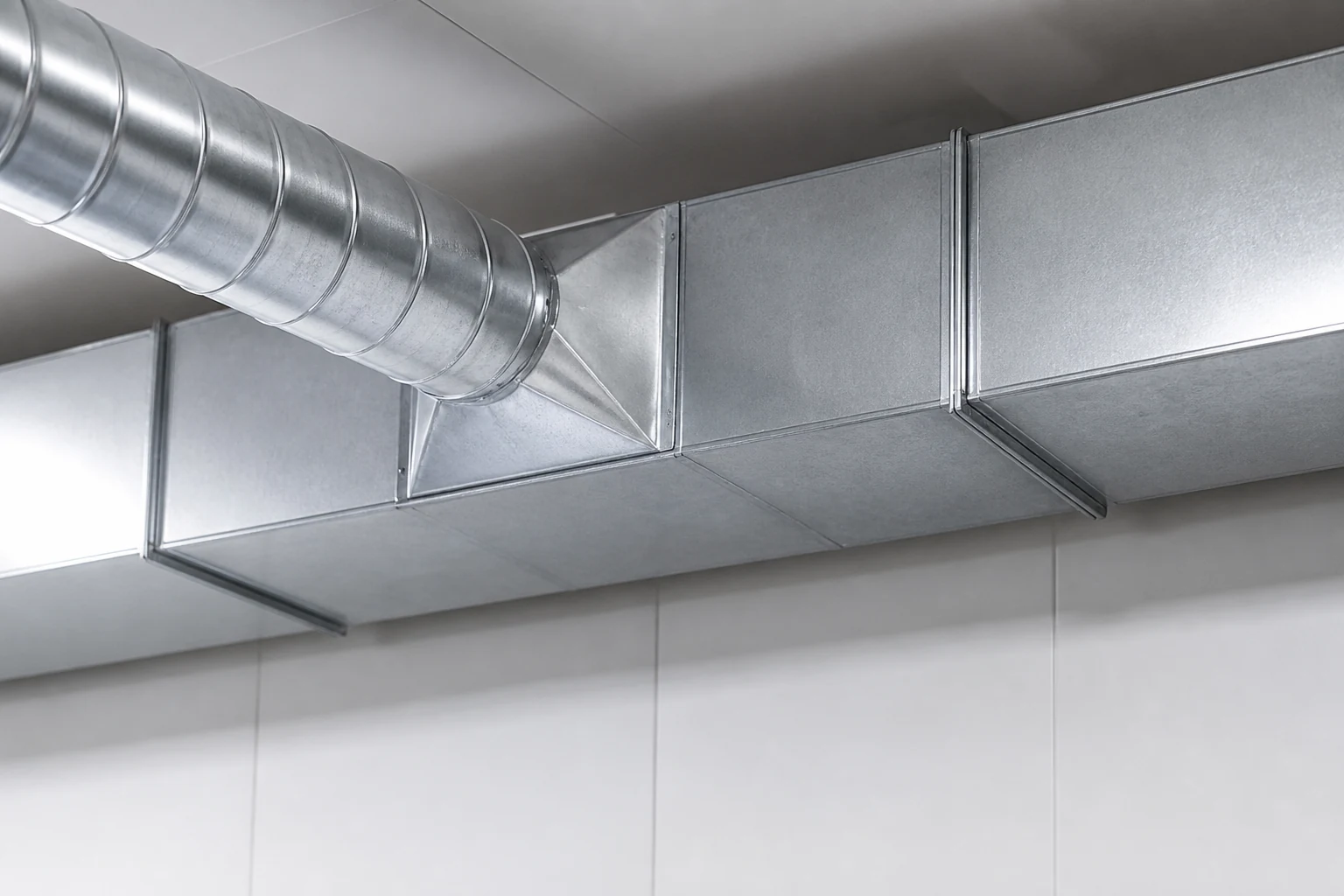
Balanced airflow supports day to day performance after the installation is complete. In occupied commercial spaces, it helps reduce complaints about stuffiness, draughts and uneven conditions. In extract systems, it helps remove air from the correct points rather than leaving weaker branches to fall behind.
It can also make maintenance more meaningful. If a system has been balanced and recorded during commissioning, later checks have a useful reference point. If airflow drops, the team can investigate filters, plant, duct condition, access panels, dampers and terminals with a clearer understanding of how the system should behave.
Balanced ducting ventilation also supports adaptability. Commercial interiors can change over time, and ventilation needs may change with them. Where dampers and access have been considered properly, adjustments can often be made with more control when layouts, occupancy or operational needs evolve.
For contractors, facilities teams and building operators, the benefit is confidence. A ductwork ventilation system that has been balanced is easier to understand, easier to verify and more likely to deliver consistent supply and extract performance where it is needed.
- Airflow balancing helps a ducted ventilation system distribute supply and extract air in the intended proportions.
- Unbalanced duct branches can lead to weak extraction, noisy terminals, draughts and uneven ventilation performance.
- Volume control dampers allow controlled adjustment of airflow through individual branches after installation.
- Commissioning is the stage where airflow is measured, adjusted and checked across the whole duct network.
- Good duct design, sealing, access and damper placement all support reliable ventilation over time.
Frequently asked questions
What is airflow balancing in a ducted ventilation system?
Airflow balancing is the process of measuring and adjusting air volumes across duct branches so each area receives the intended supply or extract airflow. It helps the system work as a complete network rather than allowing air to favour the easiest route.
Do all commercial duct systems need volume control dampers?
Many commercial duct systems benefit from volume control dampers, especially where one main duct or fan serves several branches. The exact requirement depends on the design, layout and commissioning needs of the installation.
Can airflow balancing improve extraction performance?
Yes. In extract systems, balancing can help weaker branches receive the draw they need, while preventing easier branches from taking a disproportionate share of the airflow. This supports more consistent removal of heat, moisture, odours or contaminated air.
When should ductwork ventilation be balanced?
Balancing is usually carried out during commissioning after installation. It may also be reviewed after significant layout changes, plant changes, ductwork alterations or performance concerns.
Need support with ductwork airflow control?
CVK Ductwork can help with practical ductwork solutions, including volume control dampers for commercial ventilation systems that need reliable airflow adjustment after installation.