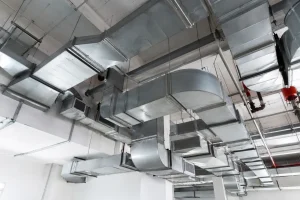
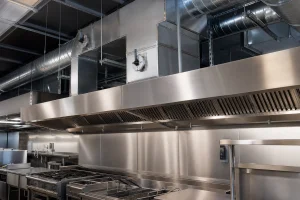
Pressure loss is one of the main reasons a ventilation system can look right on paper yet struggle in day to day use. If air cannot move through the ductwork efficiently, rooms may feel stuffy, extract points may underperform and fans may work harder than they should.
For commercial and industrial buyers, understanding pressure loss helps make better decisions about duct routing, sizing, fittings and installation quality. It is not just a technical detail. It affects how well a ducted ventilation system performs once it is in service.
What pressure loss means in a ducted ventilation system
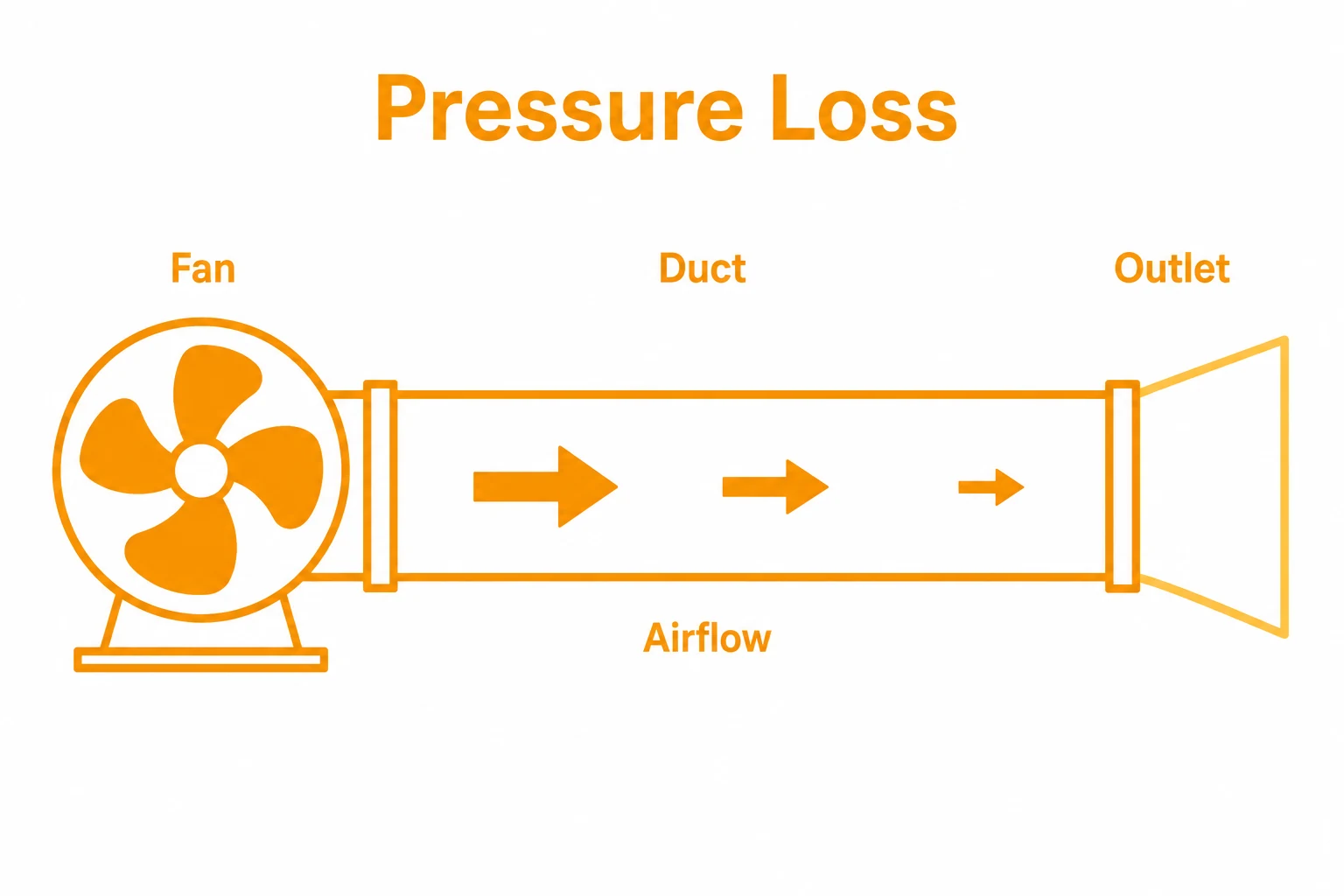
Pressure loss is the resistance air meets as it travels through ventilation ductwork. Every metre of duct, every bend, every branch, every damper and every grille adds some resistance. The fan has to overcome that resistance to move the required volume of air through the system.
In a well designed ventilation duct, pressure loss is allowed for from the start. The designer considers the required airflow, the shape and size of the ducts, the route through the building and the type of fittings needed. The aim is to create a path that allows air to move predictably, without making the fan fight unnecessary resistance.
When pressure loss is underestimated, the system may not deliver the intended airflow at the points that need it. This can affect supply air, extract air or both. In practical terms, some areas may receive too little fresh air, extract can be weak at key points and the system may be harder to balance.
Pressure loss does not mean all resistance is bad. Any real air duct design has resistance because air is moving through a physical system. The issue is whether that resistance has been understood, calculated and managed. Professional ventilation ducting is planned with airflow performance in mind, not just physical fit.
Why duct size, shape and route affect airflow
Duct size has a direct effect on air velocity and resistance. If ductwork is too small for the required airflow, air has to travel faster through it. Higher velocity can increase pressure loss, noise and strain on the fan. If ductwork is oversized without good reason, it can create its own design issues and may be harder to integrate neatly into the available space.
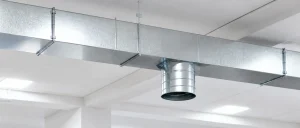
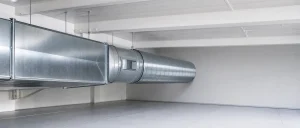
Shape matters as well. Rectangular ductwork is often useful where ceiling voids, structural constraints or plant layouts demand a flatter profile. Spiral ductwork can offer efficient airflow characteristics and strong structural performance in many exposed or open layouts. The right choice depends on the building, the airflow requirement and the available route.
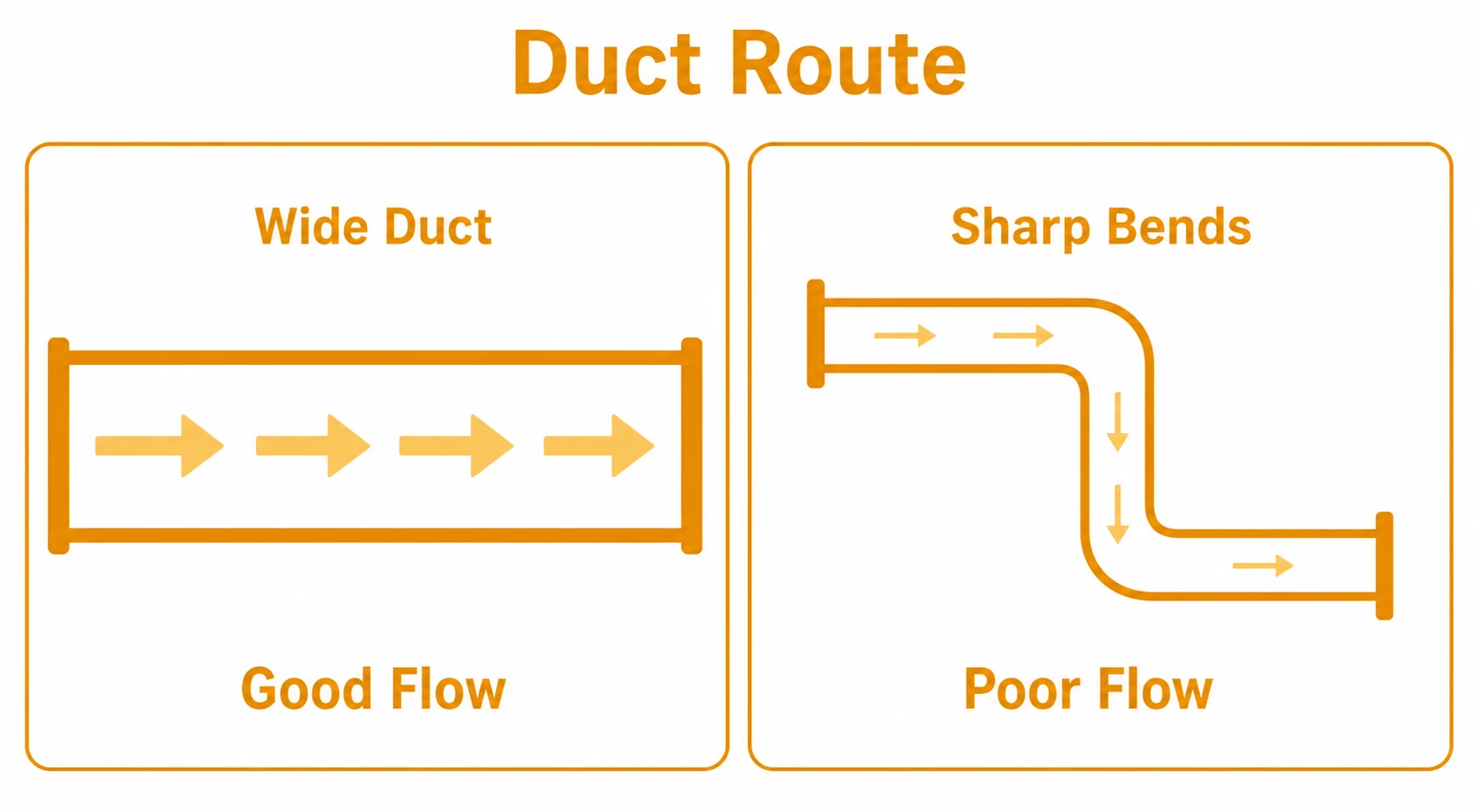
Routing is often where good duct design makes the biggest difference. A straight route with gentle changes of direction usually performs better than a route with tight bends, sudden transitions and avoidable detours. In real buildings, ductwork has to work around structure, services and access needs, so the skill is in finding a practical route without compromising airflow more than necessary.
This is why early coordination matters. When ventilation ductwork is considered late, the remaining route may force extra offsets or restrictive fittings. When it is planned properly, the duct design for HVAC system performance can support the intended airflow while still fitting the wider installation.
The role of fittings, dampers and branches
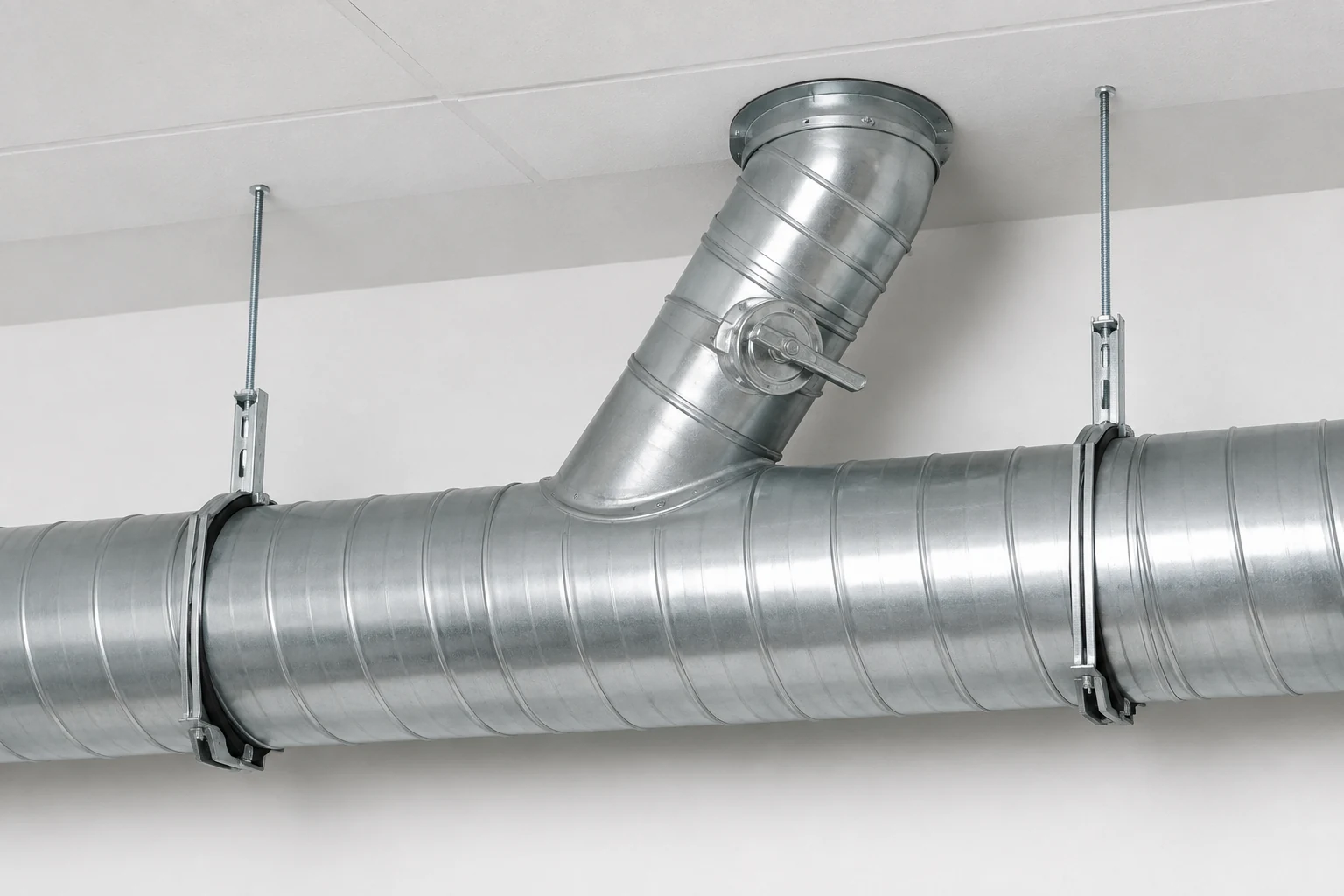
Pressure loss is not caused by duct runs alone. Fittings can have a major influence on performance. Bends, reducers, tees, branches, take offs, access panels and terminal connections all change the way air moves. Some changes are unavoidable, but their design and installation quality make a noticeable difference.
A sharp change in direction can disturb airflow and create turbulence. A poorly selected transition can increase resistance where the duct changes size. A branch that is not designed with the wider system in mind can make one run easy for air to enter while another receives less than intended. These details are easy to overlook, but they can shape the final performance of the whole system.
Volume control dampers are especially important because they allow airflow to be adjusted during commissioning and balancing. They are not a substitute for good duct design, but they are a practical tool for fine tuning the system. Correct damper placement gives commissioning engineers better control over how air is distributed across the duct network.
If you want more detail on the commissioning side, CVK Ductwork has a useful guide to airflow balancing in ducted ventilation systems. Balancing works best when the ductwork has already been designed and installed with sensible pressure loss in mind.
How poor installation can increase pressure loss
Even a sound air duct design can be weakened by poor installation. Duct sections need to be aligned correctly, supported properly and connected cleanly. If joints are badly fitted, internal edges are uneven or components are forced into position, airflow can become less stable and resistance can increase.
Air leakage is another common performance issue. If conditioned or extracted air escapes through poorly sealed joints, the fan still uses effort to move it, but less air reaches the intended terminal points. Leakage can also make it harder to balance the system, because measured airflow may not match design expectations.
Sealing standards, access for maintenance and careful workmanship all support long term system performance. Ductwork that is neatly installed, properly sealed and accessible for inspection is easier to commission and easier to maintain. The result is a ventilation system that is more likely to keep performing as designed.
For buyers comparing quotations, this is an important point. A lower quality installation may still look like ductwork, but the hidden details affect airflow, pressure loss and future reliability. The difference is often found in joint quality, fit, support, coordination and attention to the airflow path.
There is also a direct link between sealing and system efficiency. The guide to duct sealing for commercial ventilation airflow explains why airtight duct connections matter once the system is running.
Why pressure loss matters for kitchens, workshops and commercial interiors
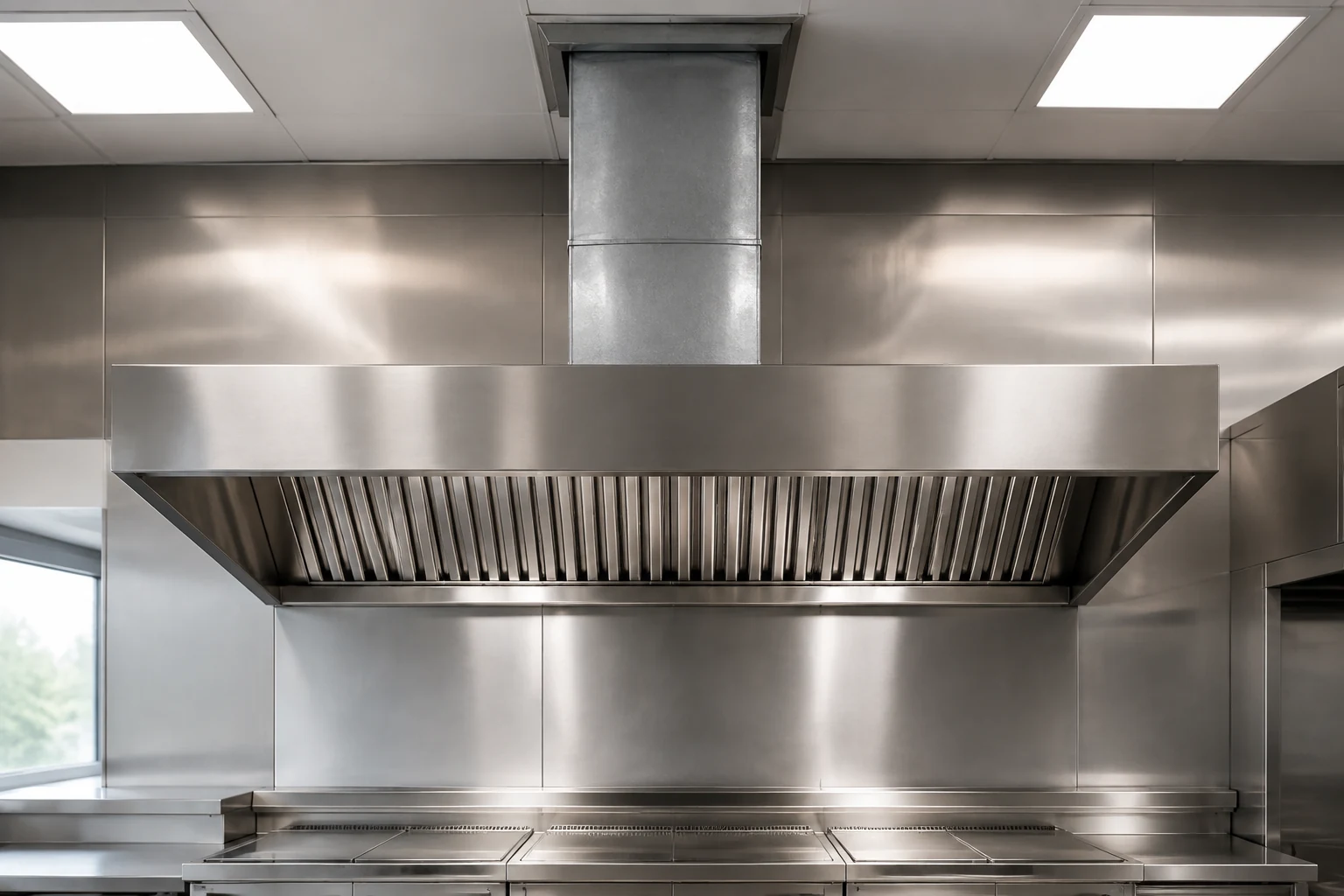
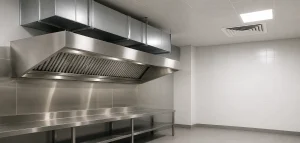
Different environments place different demands on ventilation ductwork. A kitchen extraction system, for example, needs reliable extract performance at the canopy and a duct route that can handle the design duty safely and consistently. If pressure loss is not managed, extract performance can suffer and the system may not respond as intended during busy service periods.
In workshops, production areas and commercial interiors, ventilation may need to remove stale air, control heat, support comfort or help manage airborne contaminants. The ducted ventilation system has to serve real occupied spaces, not just meet a drawing requirement. If airflow is weak at the point of use, the practical value of the system is reduced.
Pressure loss also influences fan selection. A fan is chosen to deliver a certain airflow against a certain resistance. If the ductwork creates more resistance than expected, the fan may not reach the intended duty point. If the system is designed carefully, fan performance and ductwork resistance are aligned from the start.
This is where professional design and installation join up. The designer needs to understand the airflow requirement, and the installer needs to deliver ductwork that reflects the design intent. For broader planning considerations, CVK Ductwork also covers how to design and install a ventilation duct system.
What buyers should ask before ductwork is installed
You do not need to be a mechanical engineer to ask useful questions about pressure loss. A good starting point is whether the duct route has been planned around airflow as well as physical access. Ask how bends, branches and transitions have been kept practical, and whether there is enough space for suitable duct sizes.
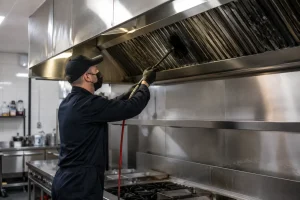
It is also worth asking how the system will be balanced. If volume control dampers are needed, they should be positioned where they can be accessed and adjusted. Access panels should also be considered where inspection and cleaning may be required, especially on extract systems.
Another sensible question is whether the ductwork will be coordinated with other services before installation. Ventilation systems often share ceiling voids and plant areas with electrical, plumbing, sprinkler and structural elements. Better coordination reduces forced changes on site, which helps protect the intended pressure loss and airflow performance.
Finally, ask how installation quality will be managed. Clean joints, correct supports, careful sealing and accurate fitting all help the finished system perform as designed. Pressure loss is not only a calculation. It is something that must be respected during fabrication, installation and commissioning.
- Pressure loss is the resistance air meets as it moves through ducts, fittings, dampers and terminals.
- Good duct sizing and routing help fans deliver the intended airflow without unnecessary resistance.
- Fittings, branches and volume control dampers can strongly affect how air is distributed across the system.
- Careful installation, sealing and coordination protect the performance built into the duct design.
- Buyers should ask about airflow, balancing, access and installation quality before ductwork is fitted.
Frequently asked questions
Is pressure loss always a problem in ventilation ductwork?
No. Some pressure loss is normal in every ducted ventilation system. It becomes a problem when it is higher than expected or has not been allowed for in the design.
Can a larger fan solve pressure loss issues?
Not always. A fan must be matched to the whole system. If ductwork is badly routed, undersized or poorly sealed, simply increasing fan capacity may create noise, imbalance or inefficient operation.
Do volume control dampers reduce pressure loss?
Volume control dampers do add some resistance, but they are used to regulate airflow. Their value is in helping the system distribute air correctly during balancing and commissioning.
When should pressure loss be considered?
Pressure loss should be considered at the design stage, then protected during fabrication, installation and commissioning. It is much easier to manage early than to correct after the system is complete.
Plan ductwork around real airflow performance
If you are planning a commercial or industrial ventilation project, CVK Ductwork can help with practical ductwork design, fabrication and installation that supports the way the system needs to perform.